MAKING A NOREN
2026 Private Commission
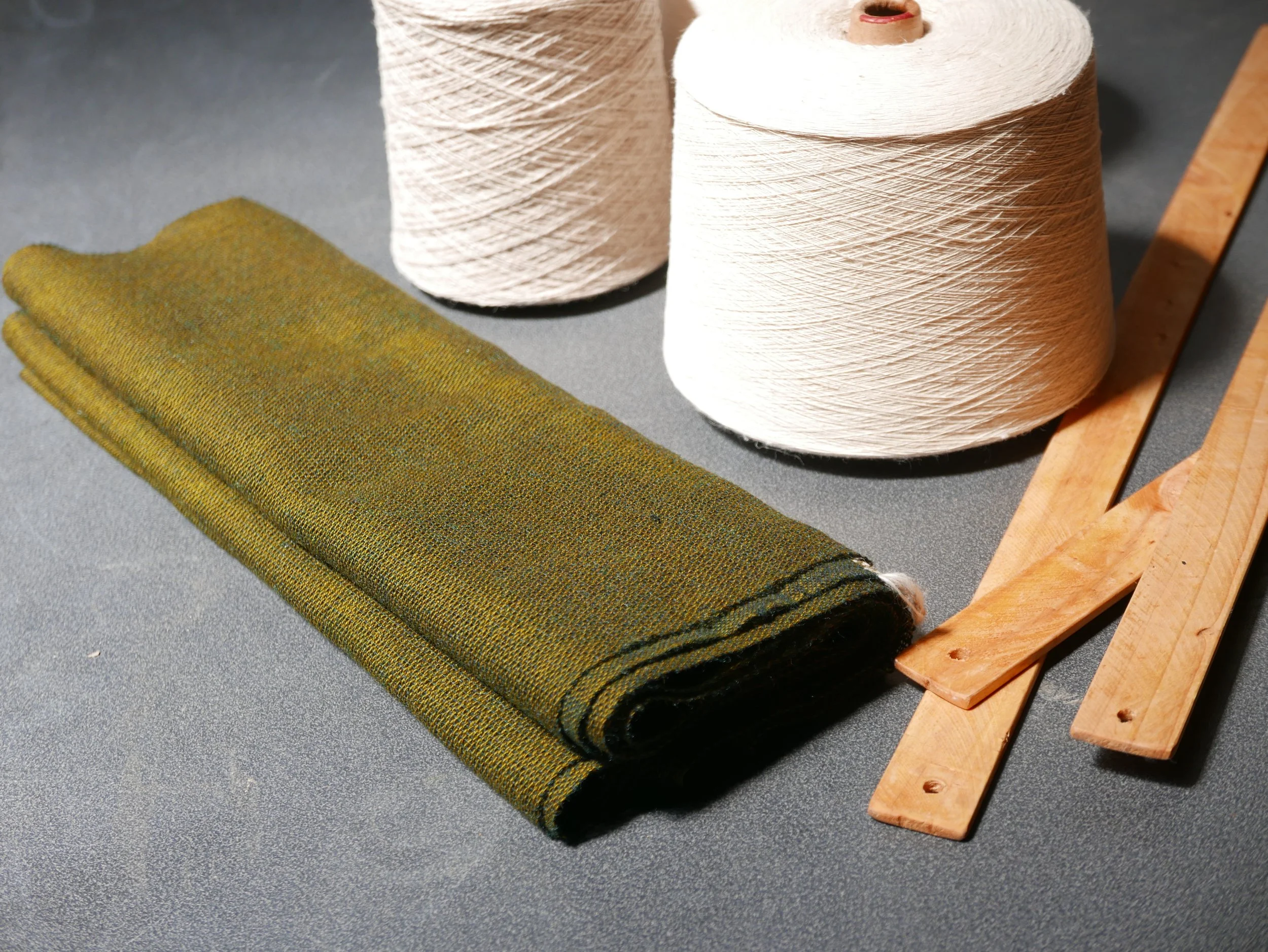
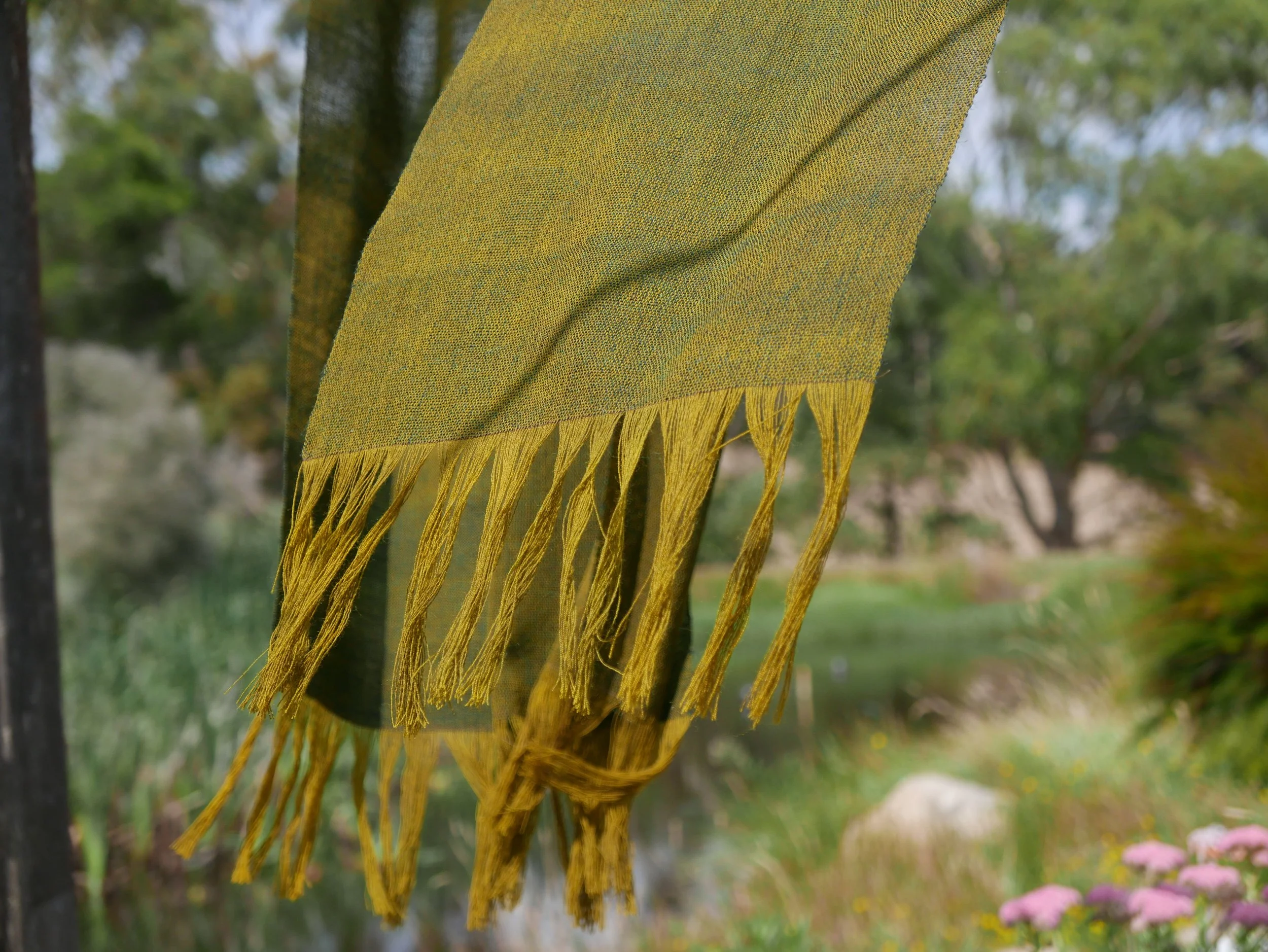
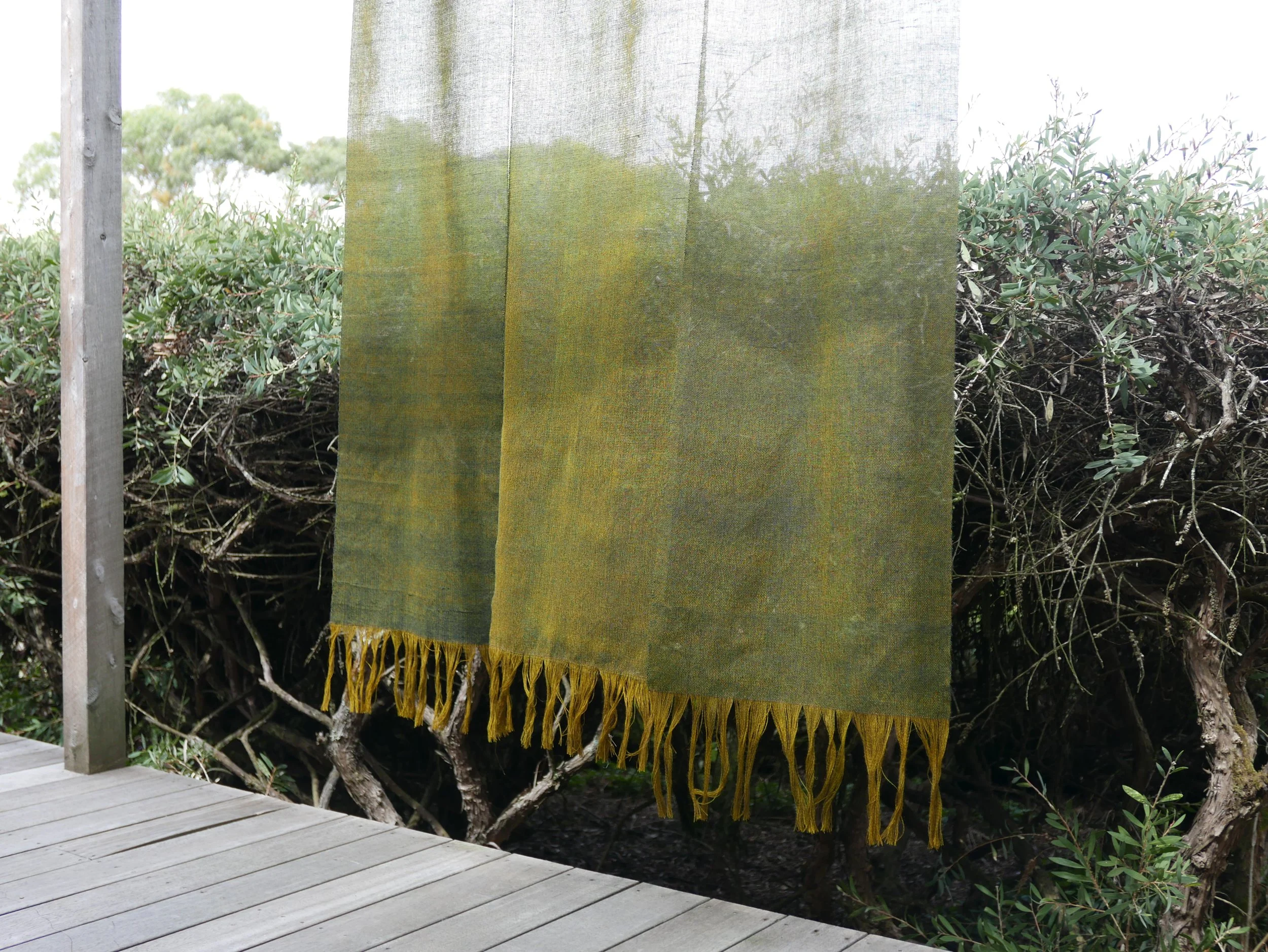
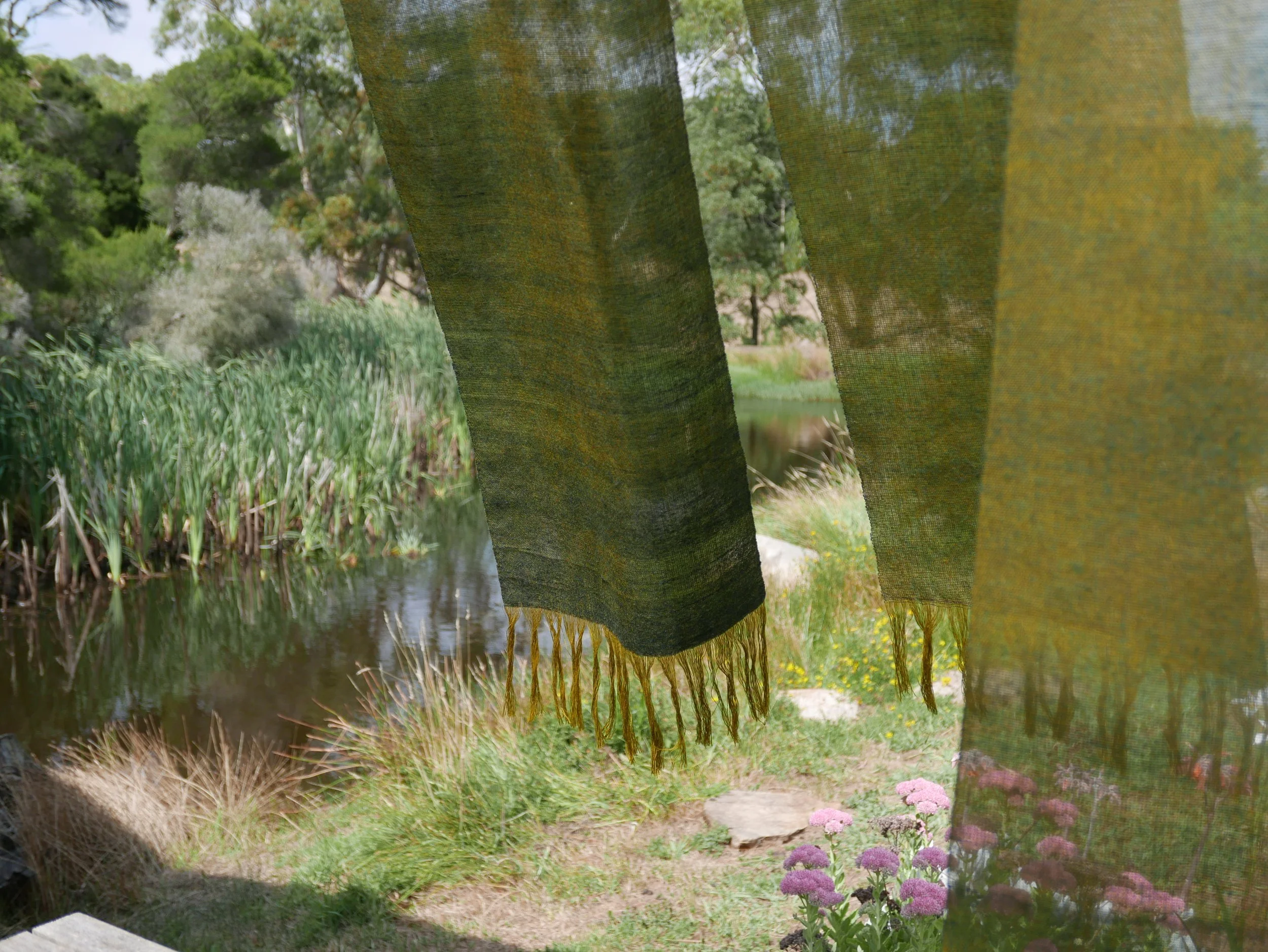
A Noren is both a thing to look at and move through. They have been a common object in Japan for thousands of years, as a functional privacy screen, blocking dust and sun, to featuring family crests or merchant branding.
An older, more weathered one might indicate the lineage of a business, while certain fibres, patterns or dye can indicate area, speciality or trade. They are designed to be part of the moving world, part of the daily function of a household or business.
A Noren also shows how aesthetics can enhance function. That objects can be beautiful and useful. Handcrafting them certainly takes time, but they are made to be lived with — brushing shoulders, catching air or fraying in their age.
Scroll down to follow my process from beginning to end.
-
![]()
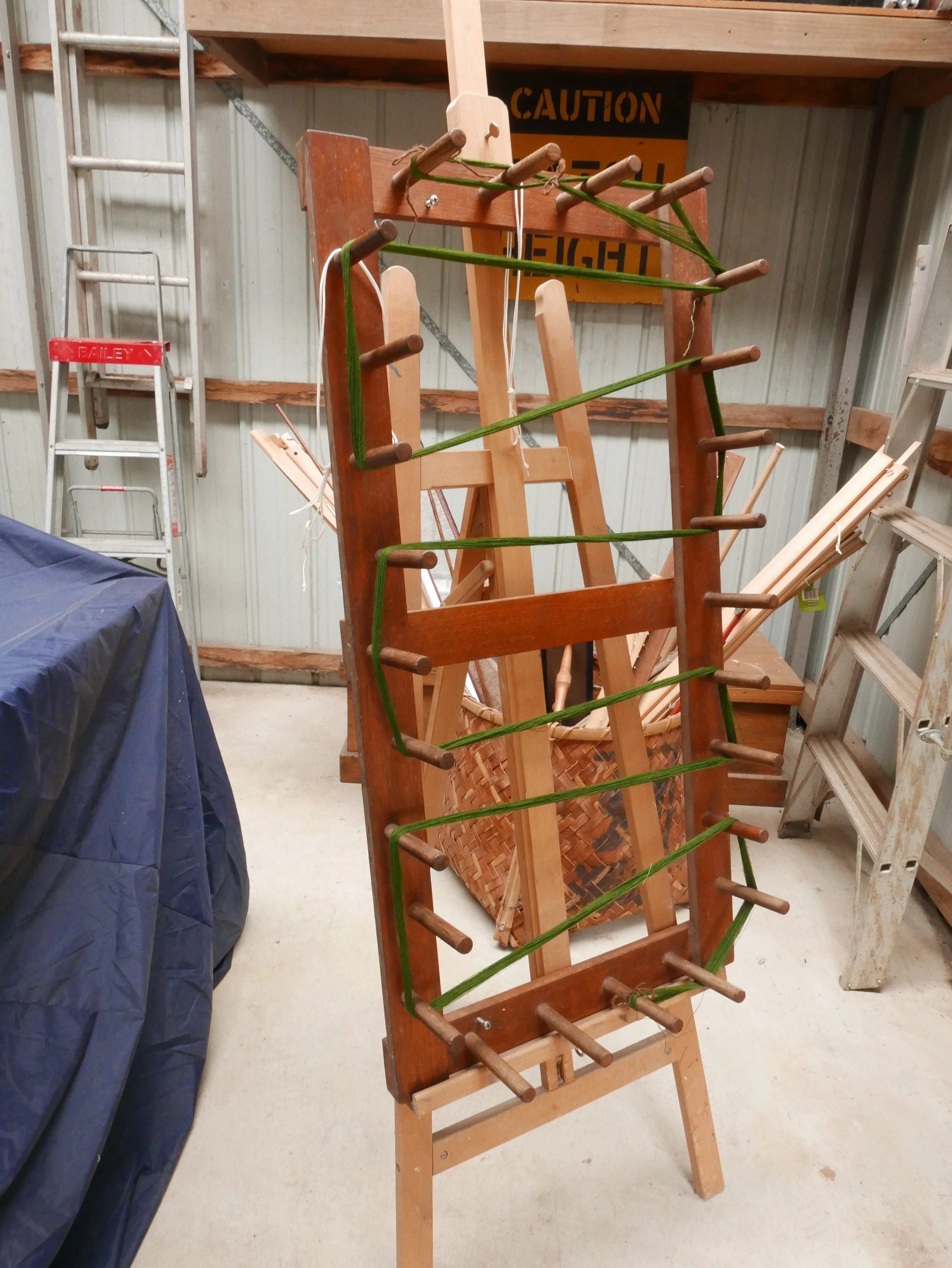
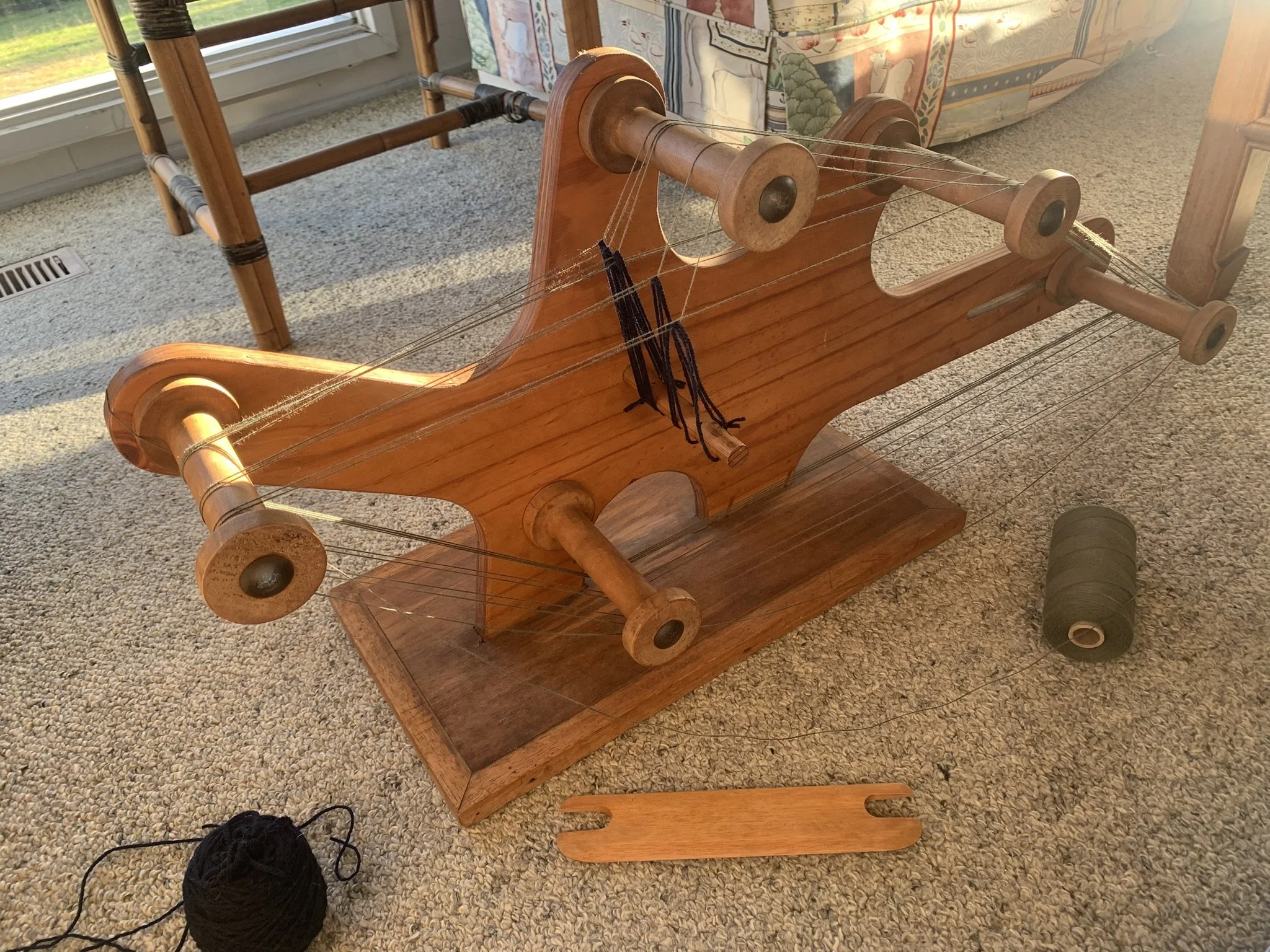
1. A warp thread is chosen and measured on a warping-board, with the desired length x width pre calculated.
-
![]()
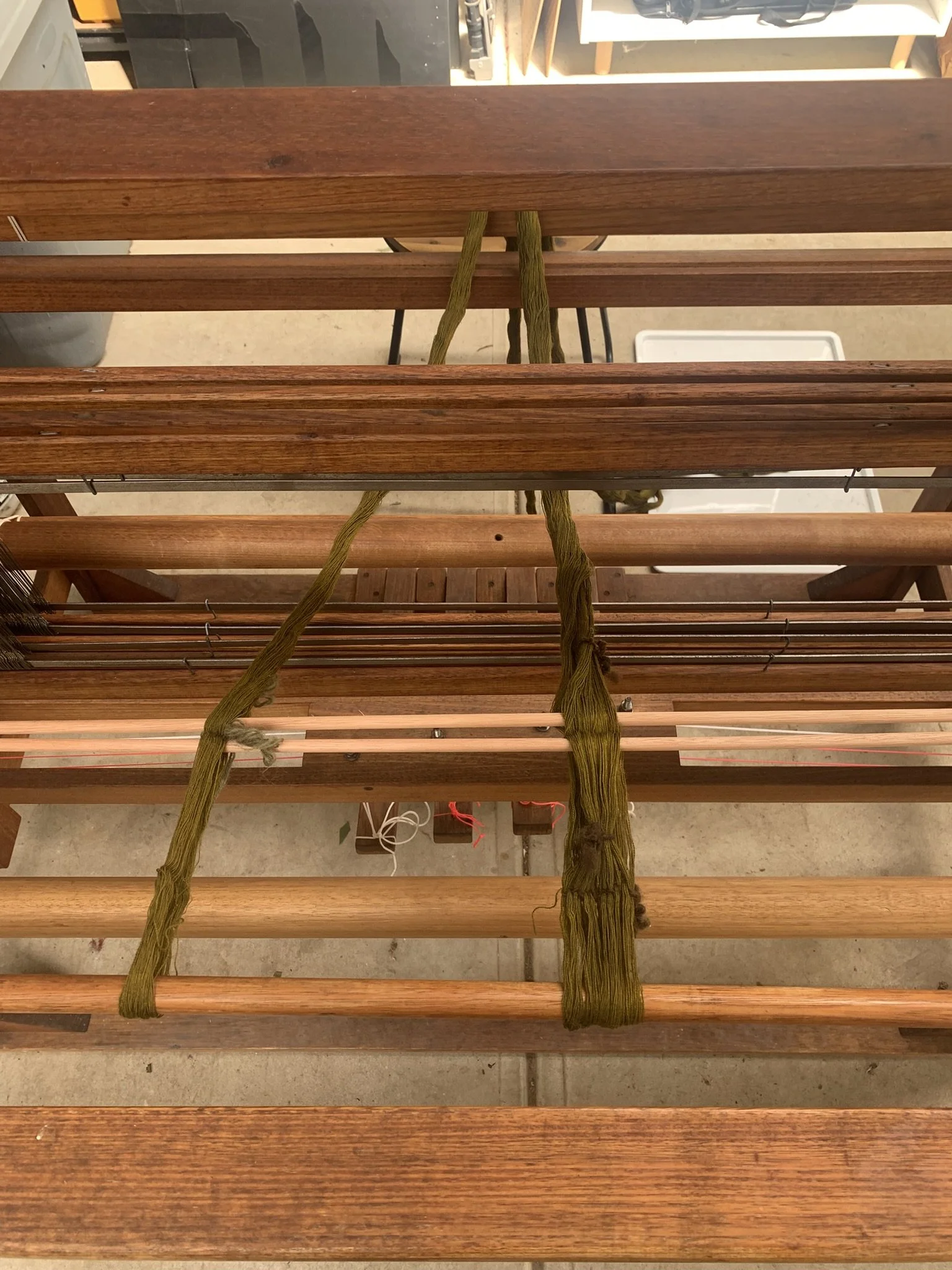
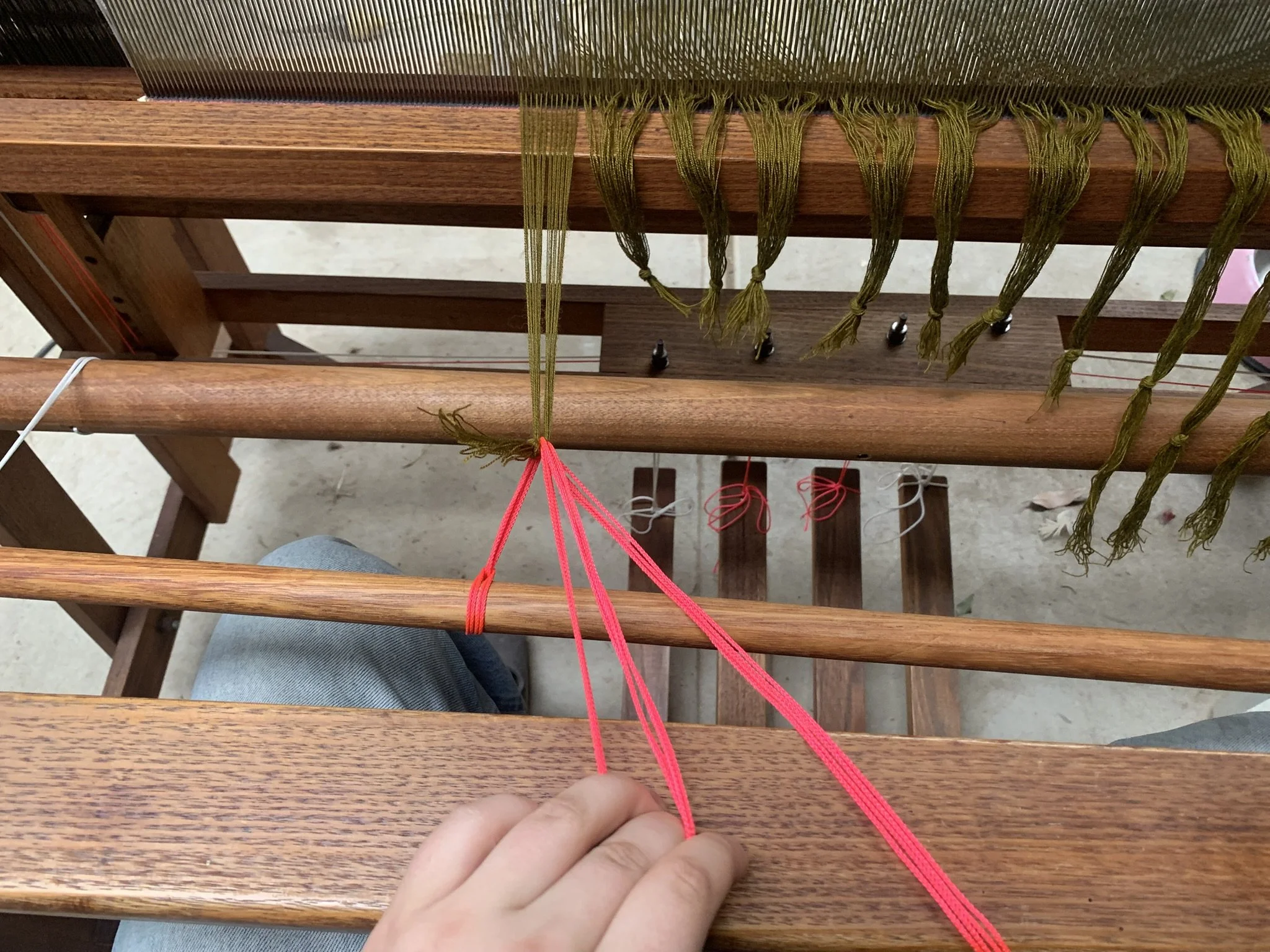
2. The warp is tied onto the loom. This particular one was in two parts.
-
![]()
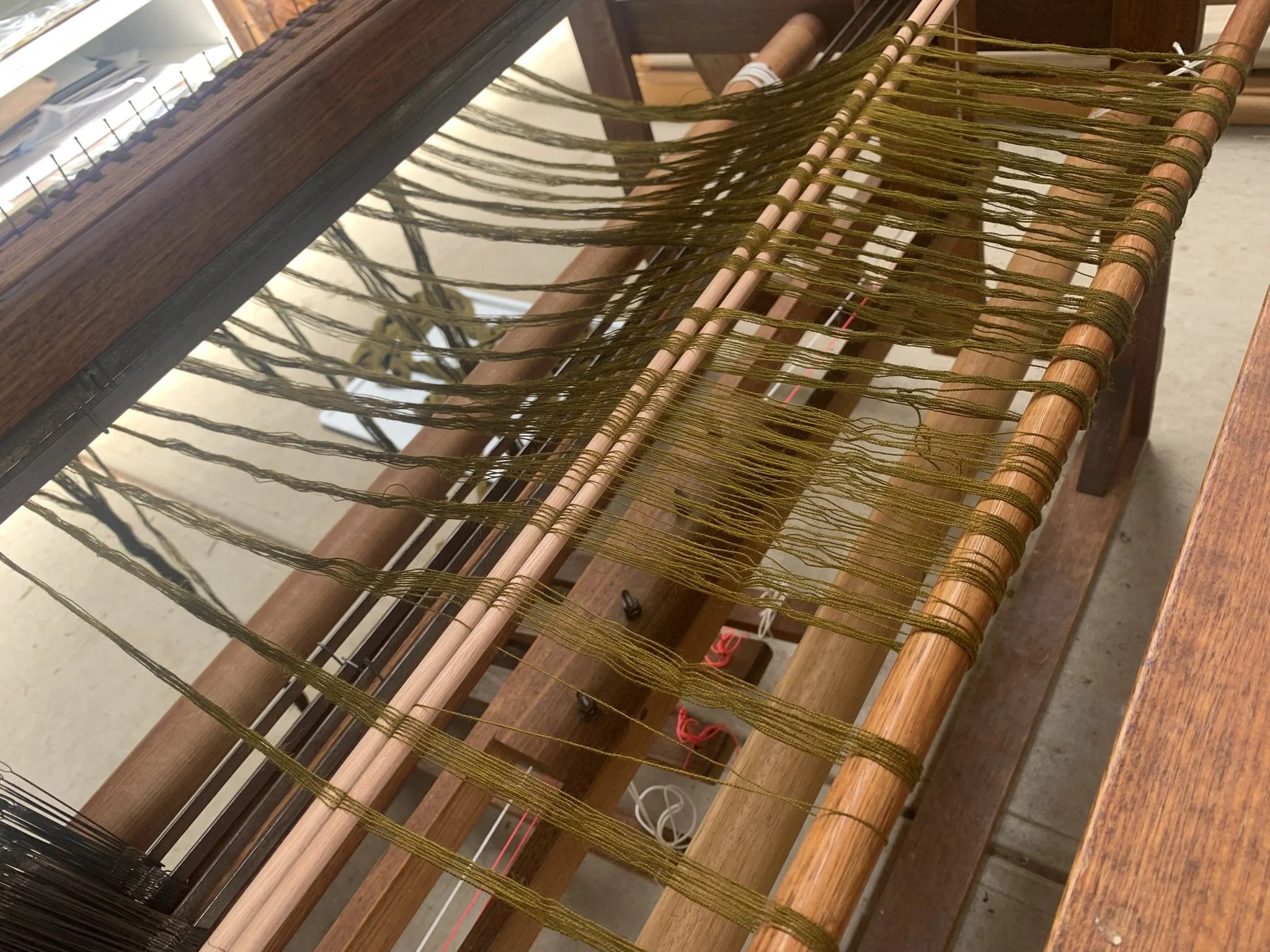
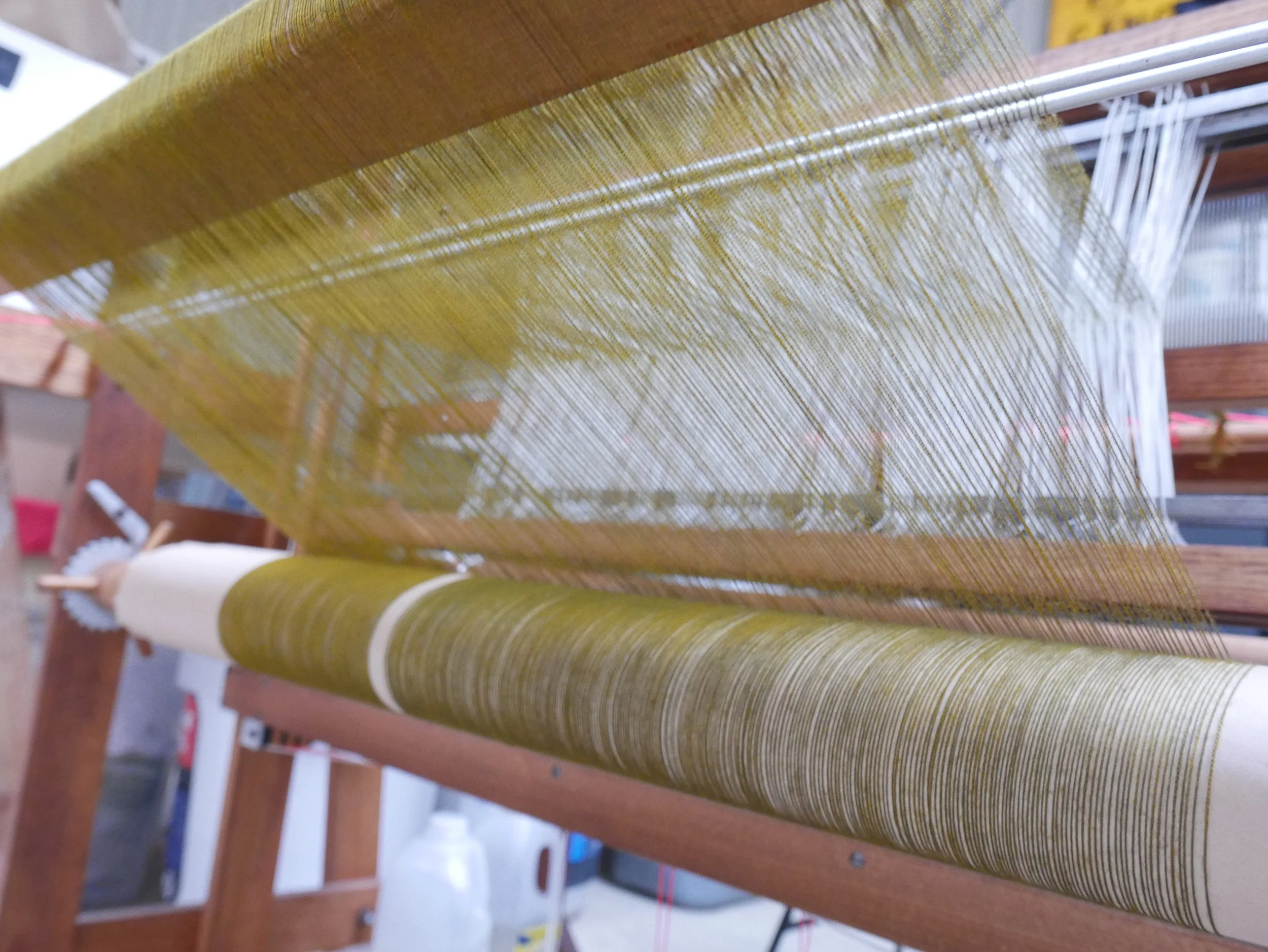
3. The warp is spread out across the back beam. The threads are crossed between two bars (cross-sticks) that keep the warp threads in order.
-
![]()
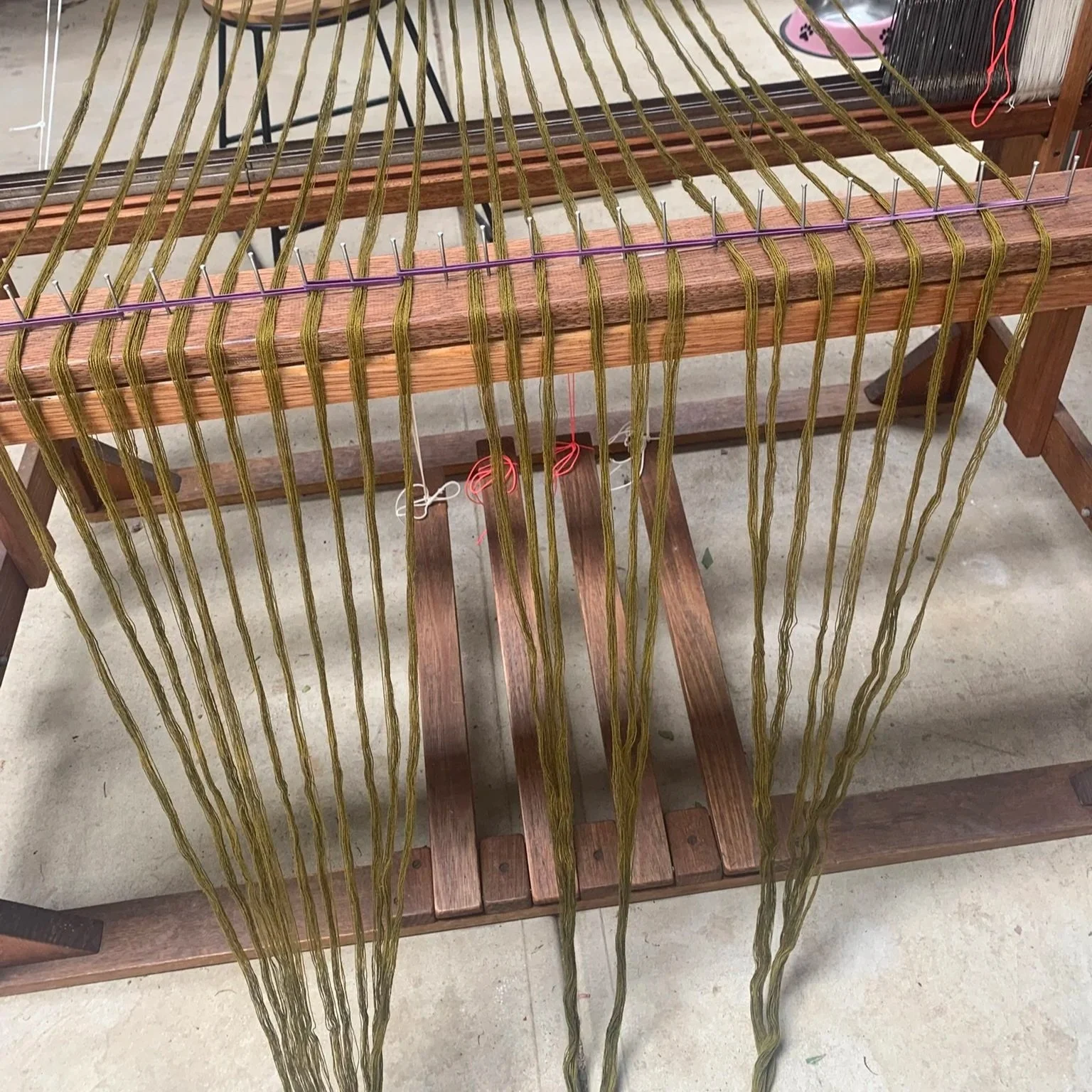
4. A raddle, spaced per inch, helps to keep the thread consistently spaced.
-
![]()
5. Even spacing is needed to roll the warp-back.
-
![]()
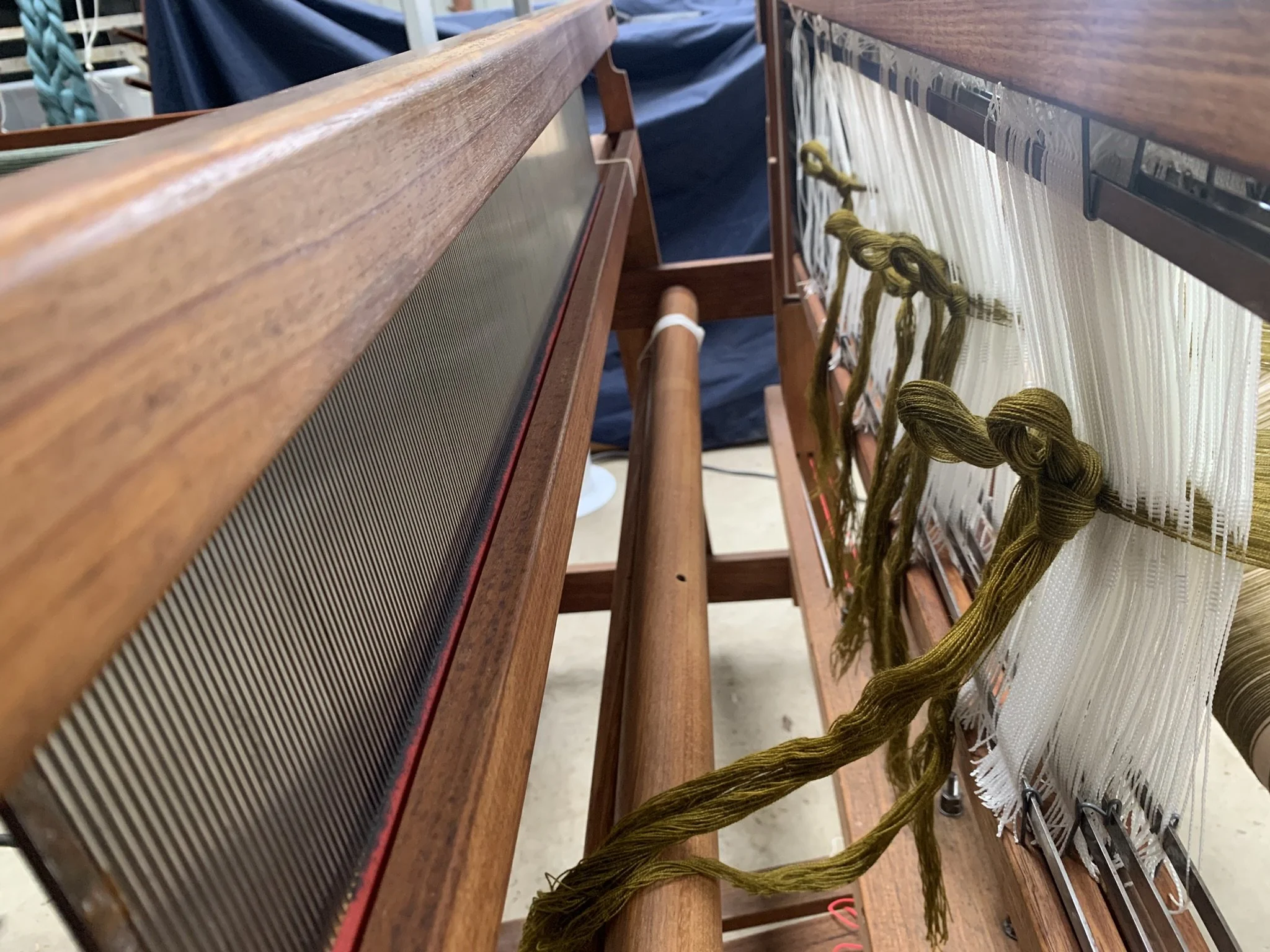
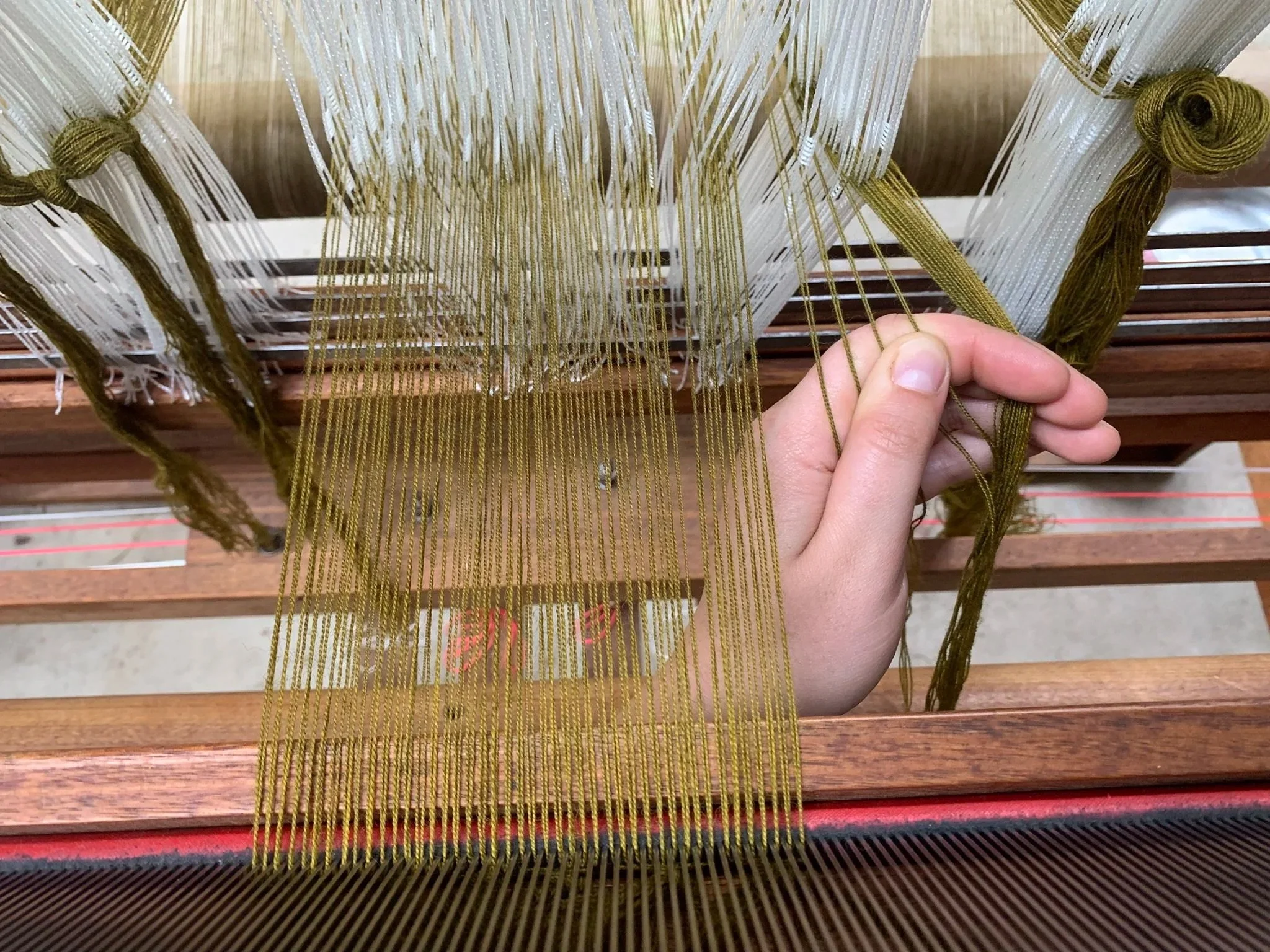
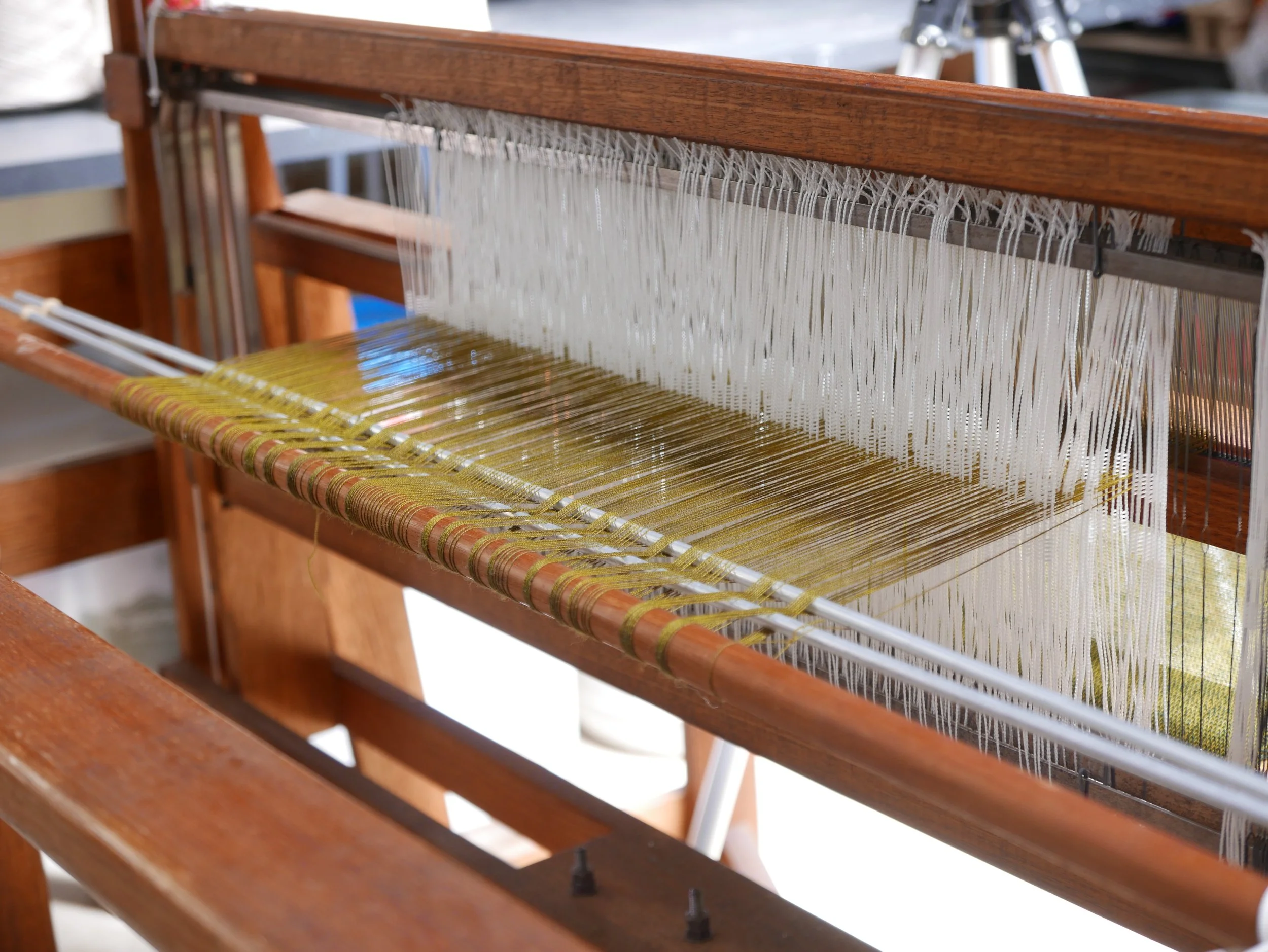
6. Each strand is then threaded in a pattern through the eye of a heddle. This warp had 400 ends (threads).
-
![]()
7. Then a separate pattern through the spacing of a reed.
-
![]()
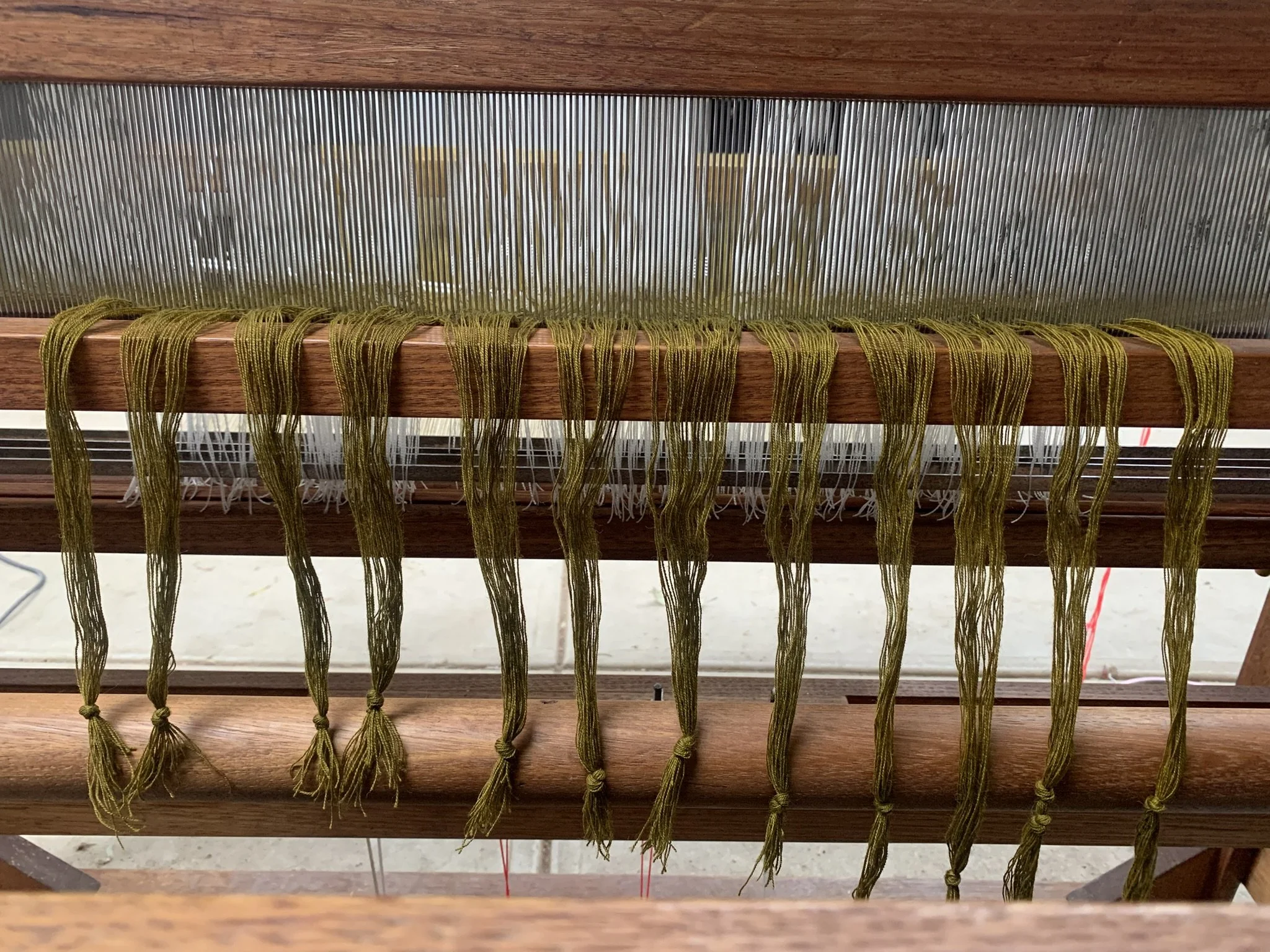
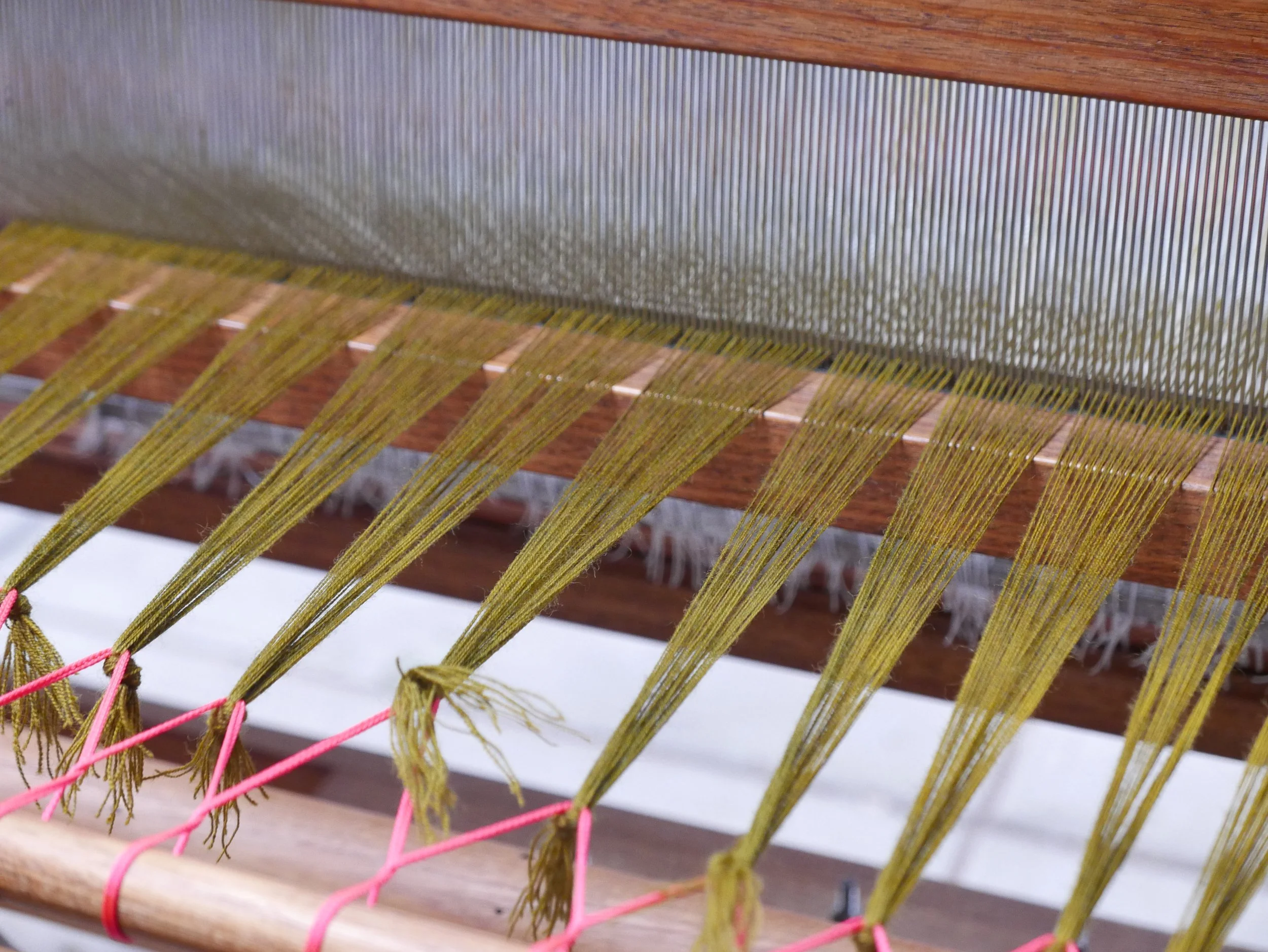
8. Now threaded, the warp is tied into knots.
-
![]()
9. This allows for the warp to be tied under tension onto a front-beam.
-
![]()
Even tension is crucial for consistency and practicality.
-
![]()
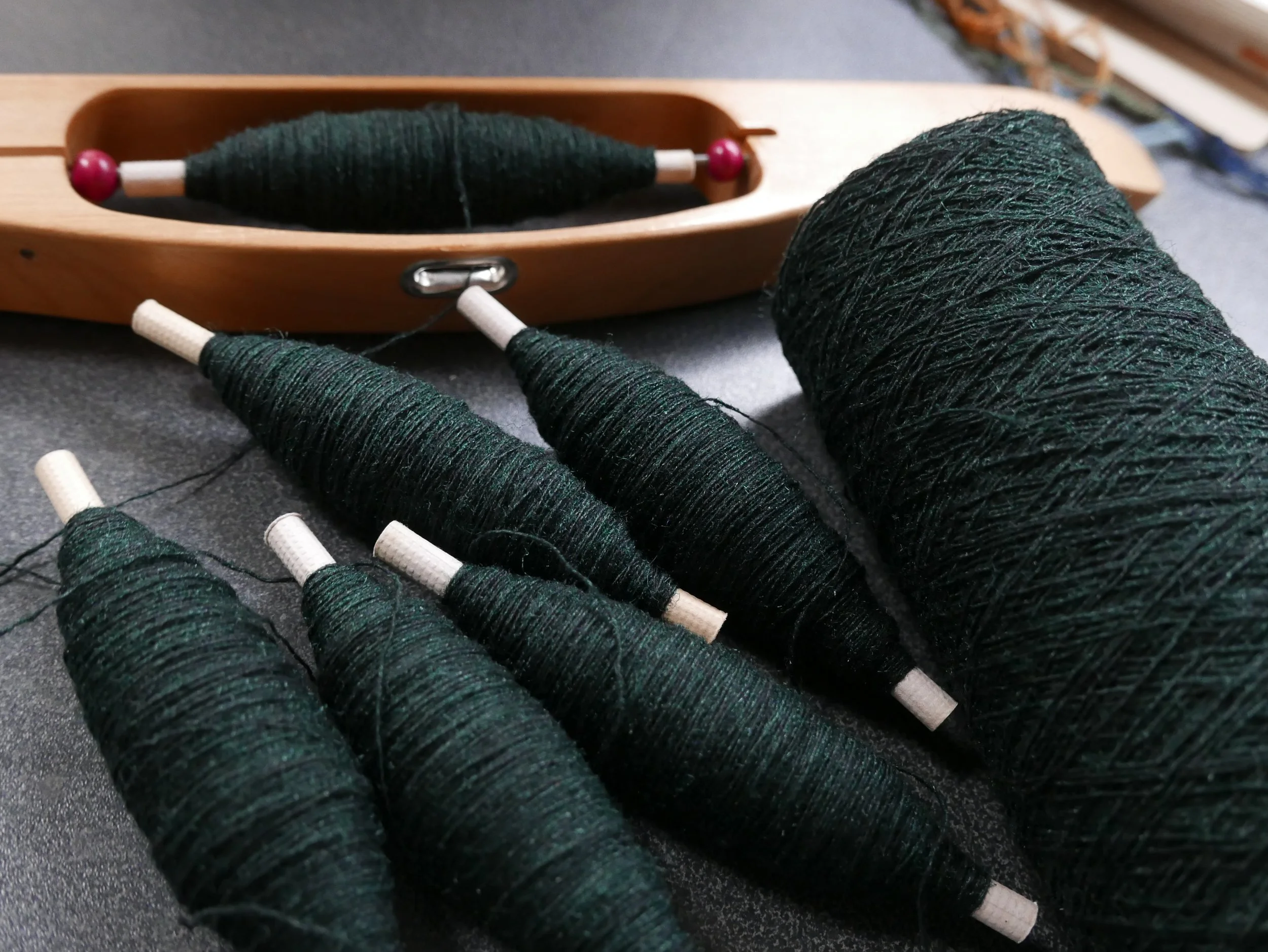
10. A weft thread is chosen and wound onto bobbins.
-
![]()
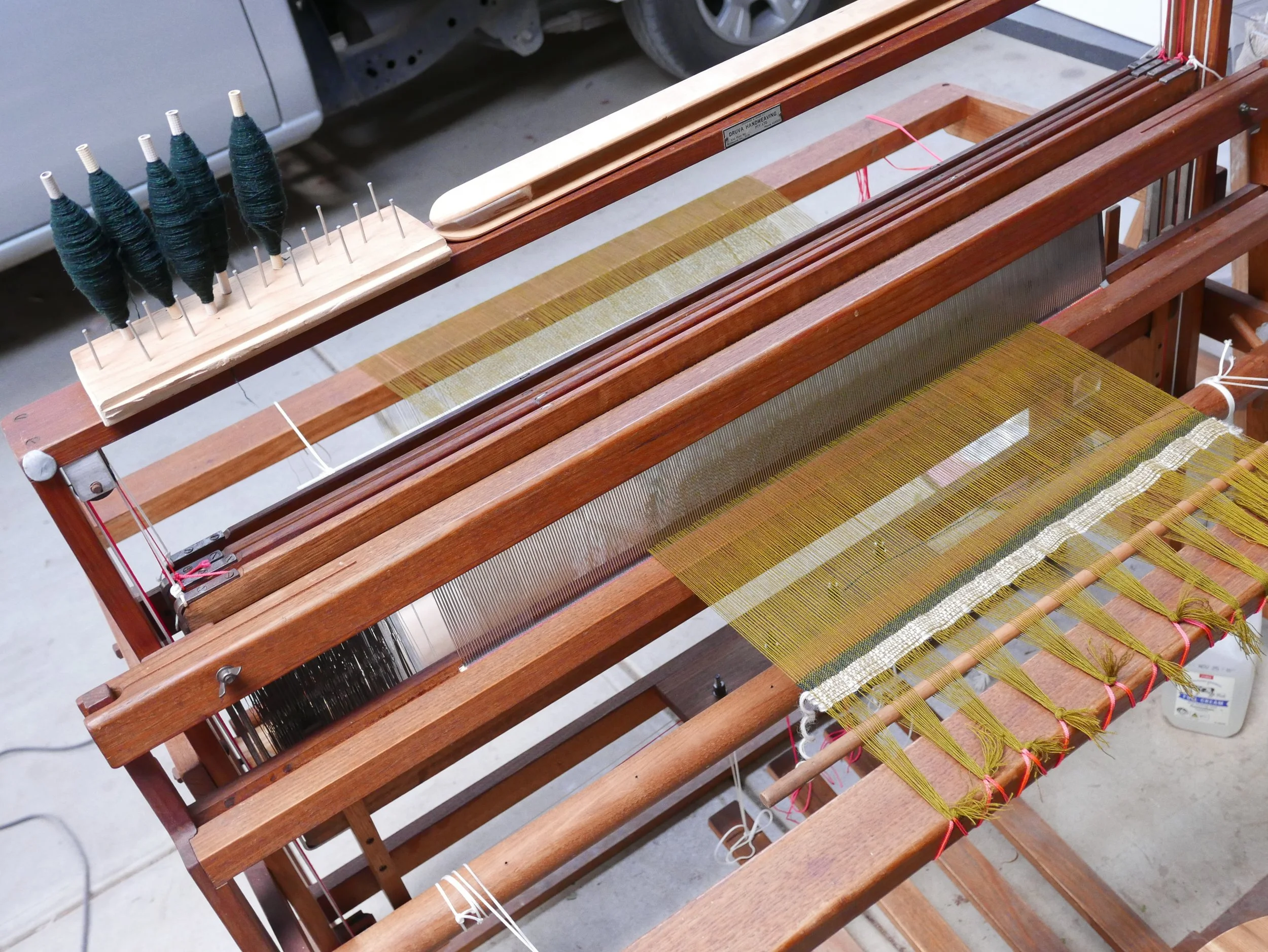
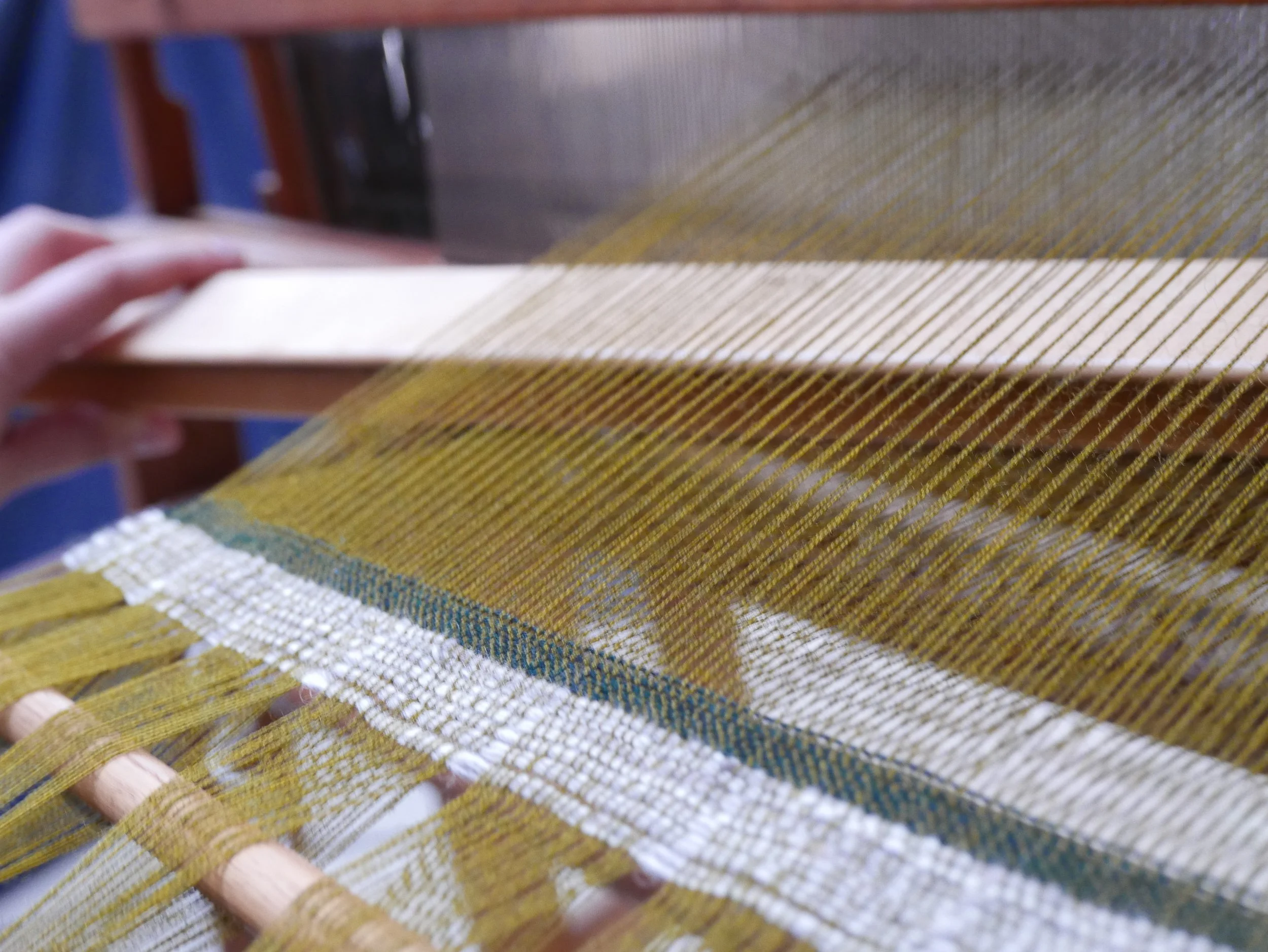
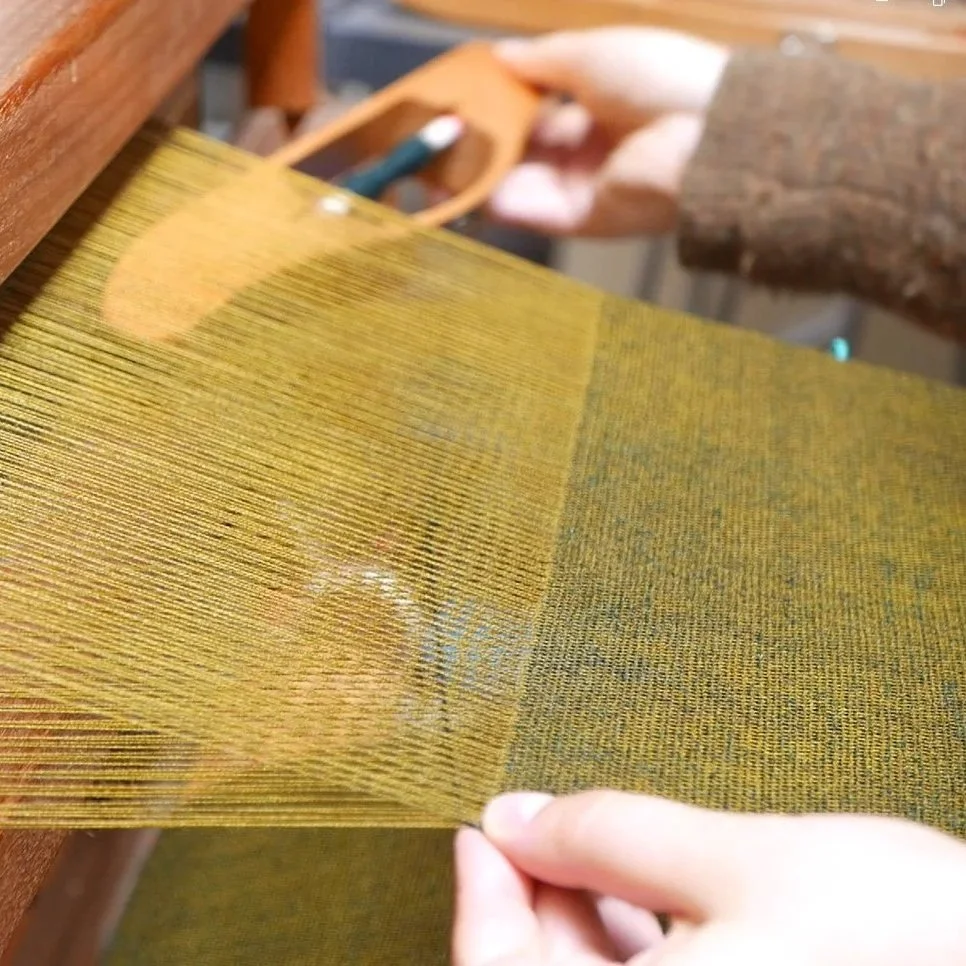
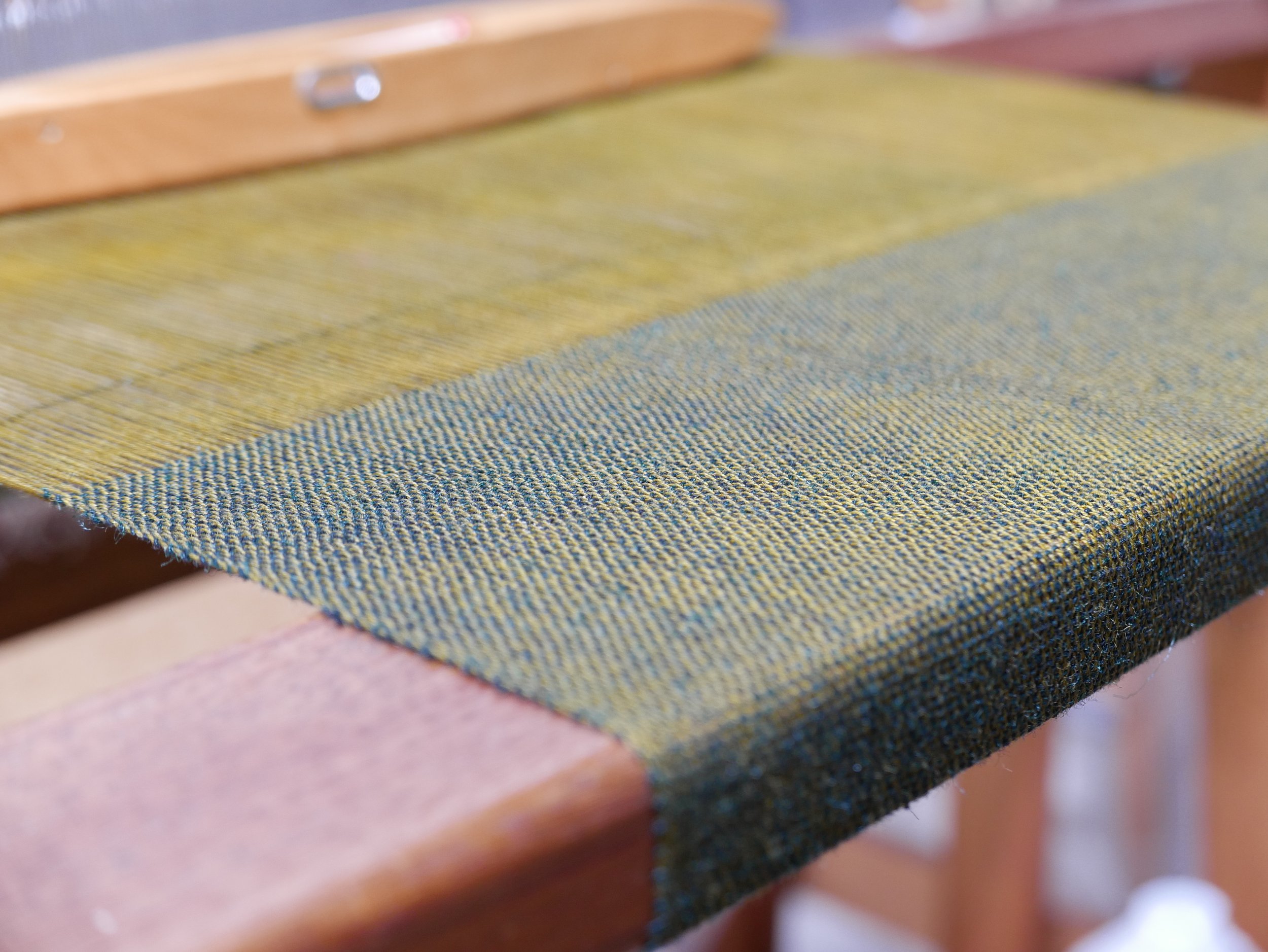
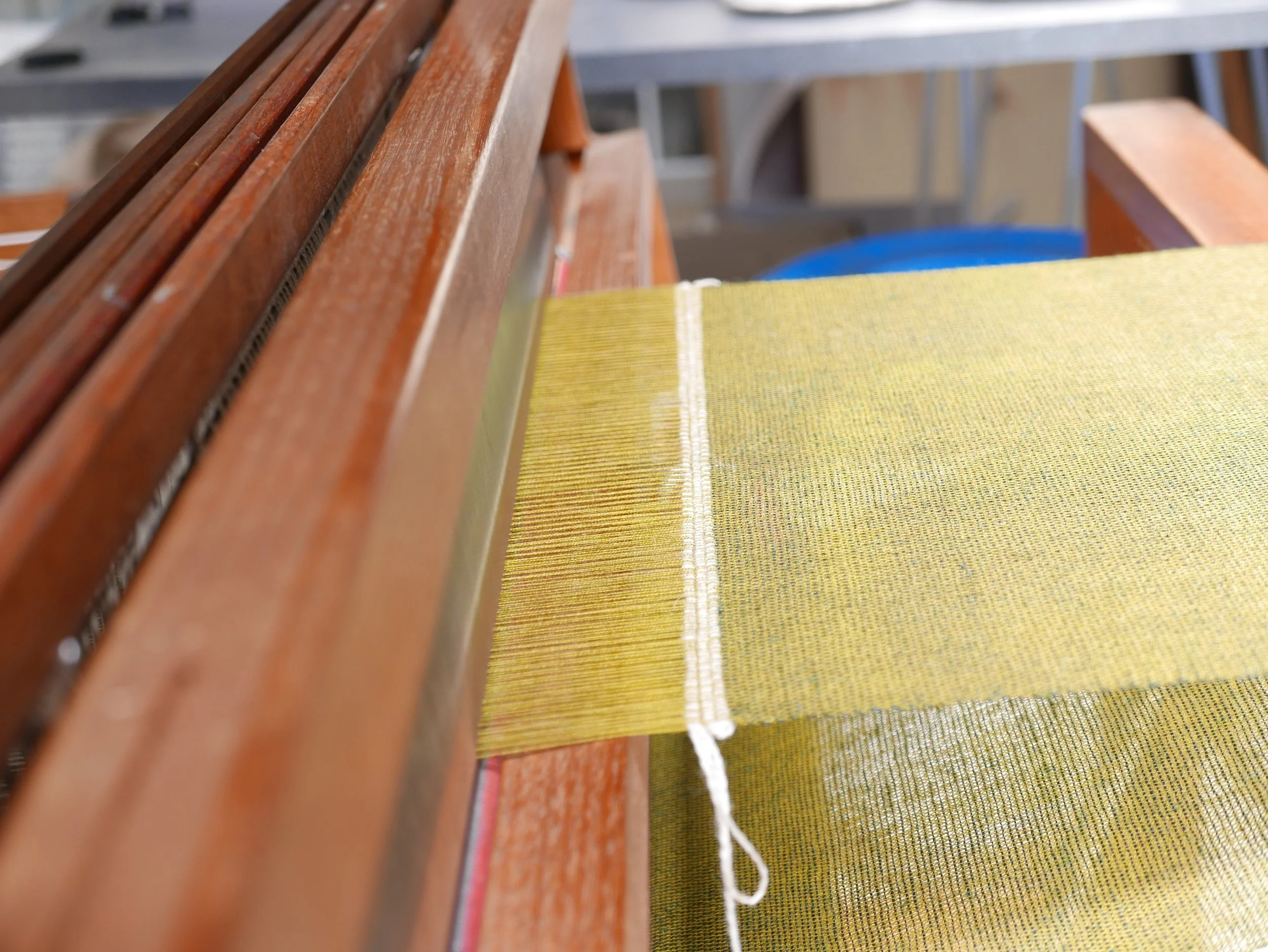
11. Now cloth can be woven. The first few inches are named a header, used to hold the woven fabric in place.
-
![]()
-
![]()
-
![]()
-
![]()
12. Towards the end of the warp length, a footer is woven.
-
![As the warp is woven, paper drops from the p]()
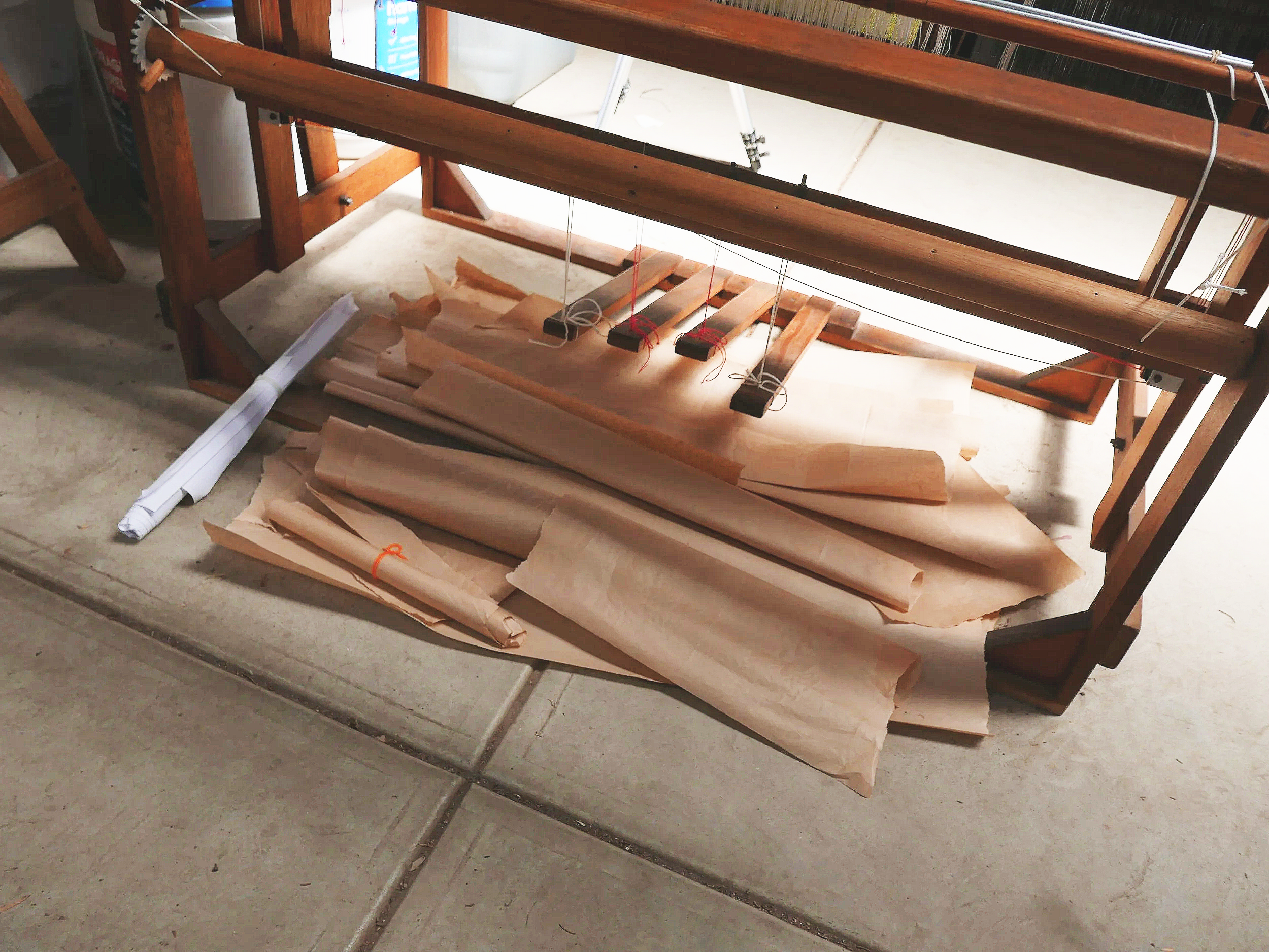
As the warp is woven, paper drops from the beam, used to ensure threads dont catch.
-
![]()
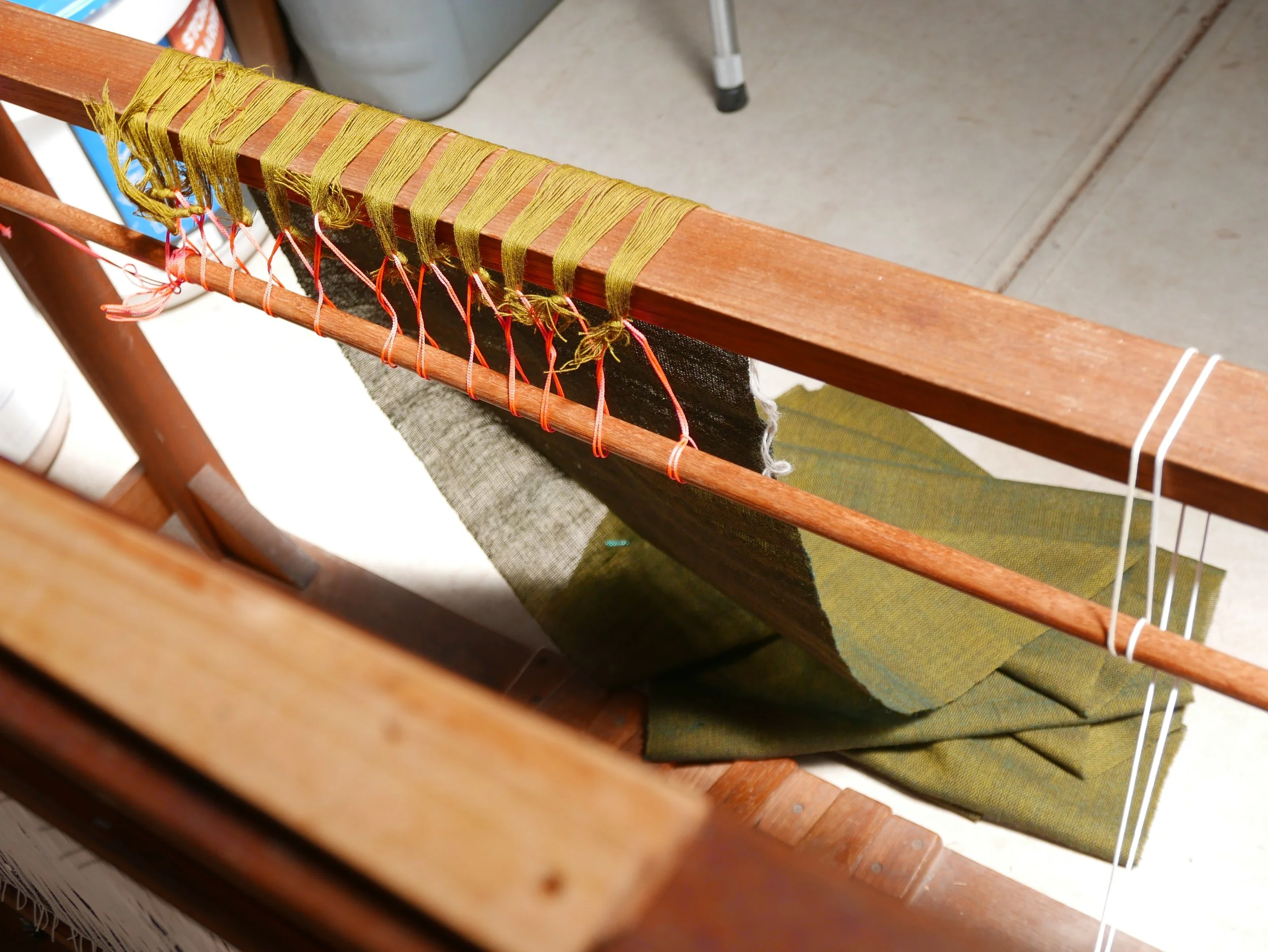
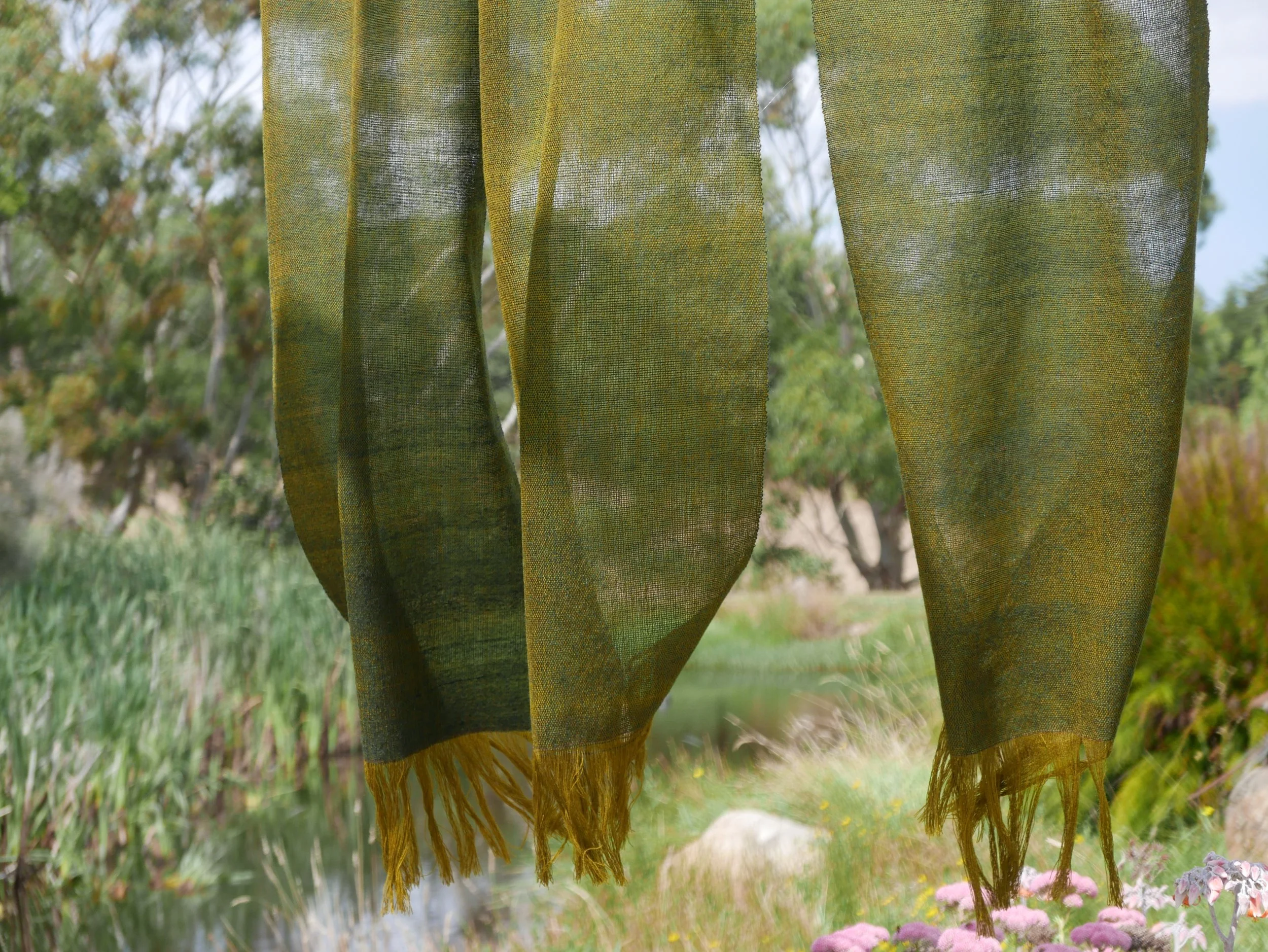
13. At the back, I give space to cut my cloth off, leaving fringe length.
-
![]()
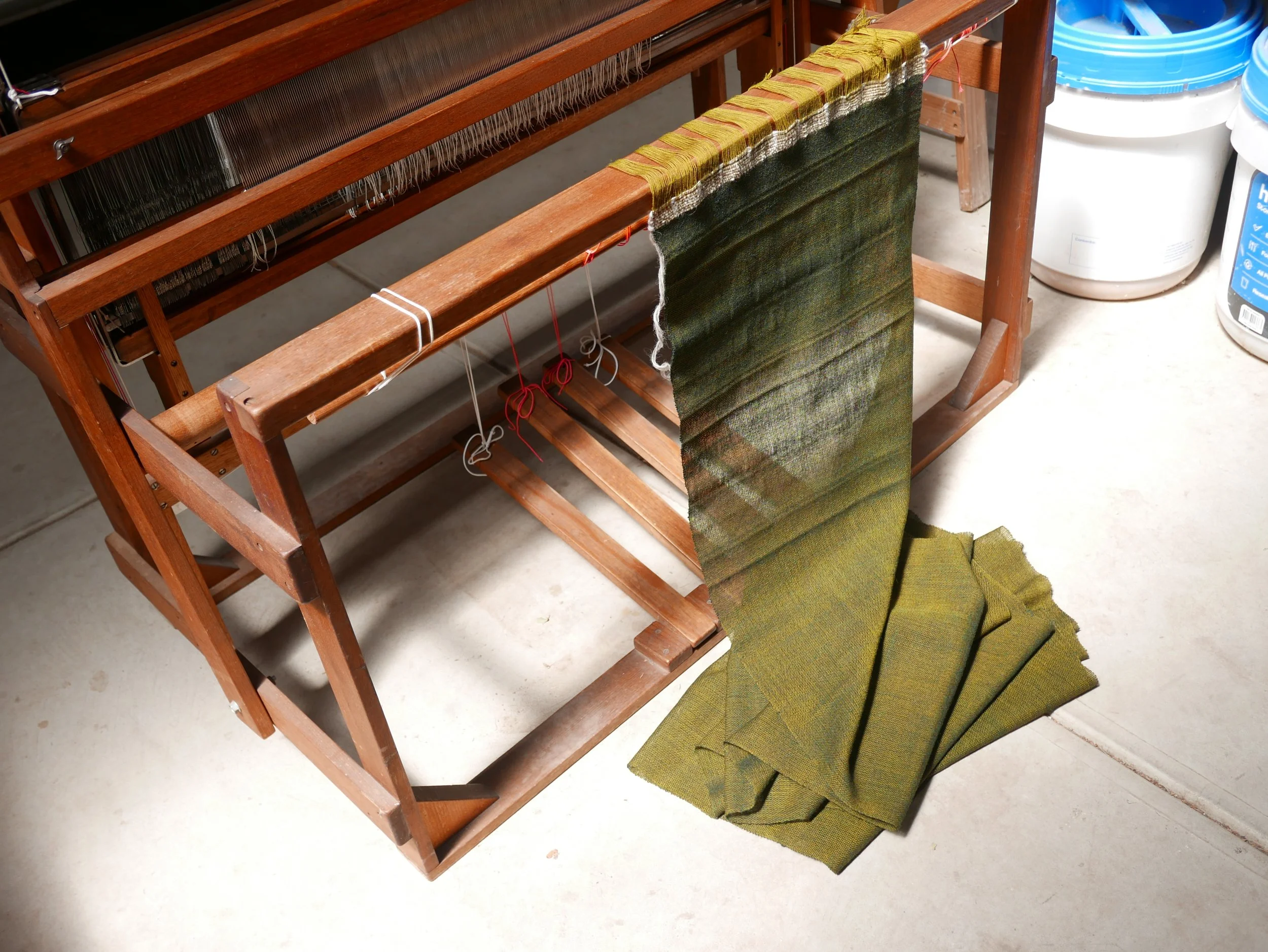
14. The cloth can now be pulled off the loom.
-
![]()
-
![The cloth is ironed and sewn at the edges.]()
-
![]()
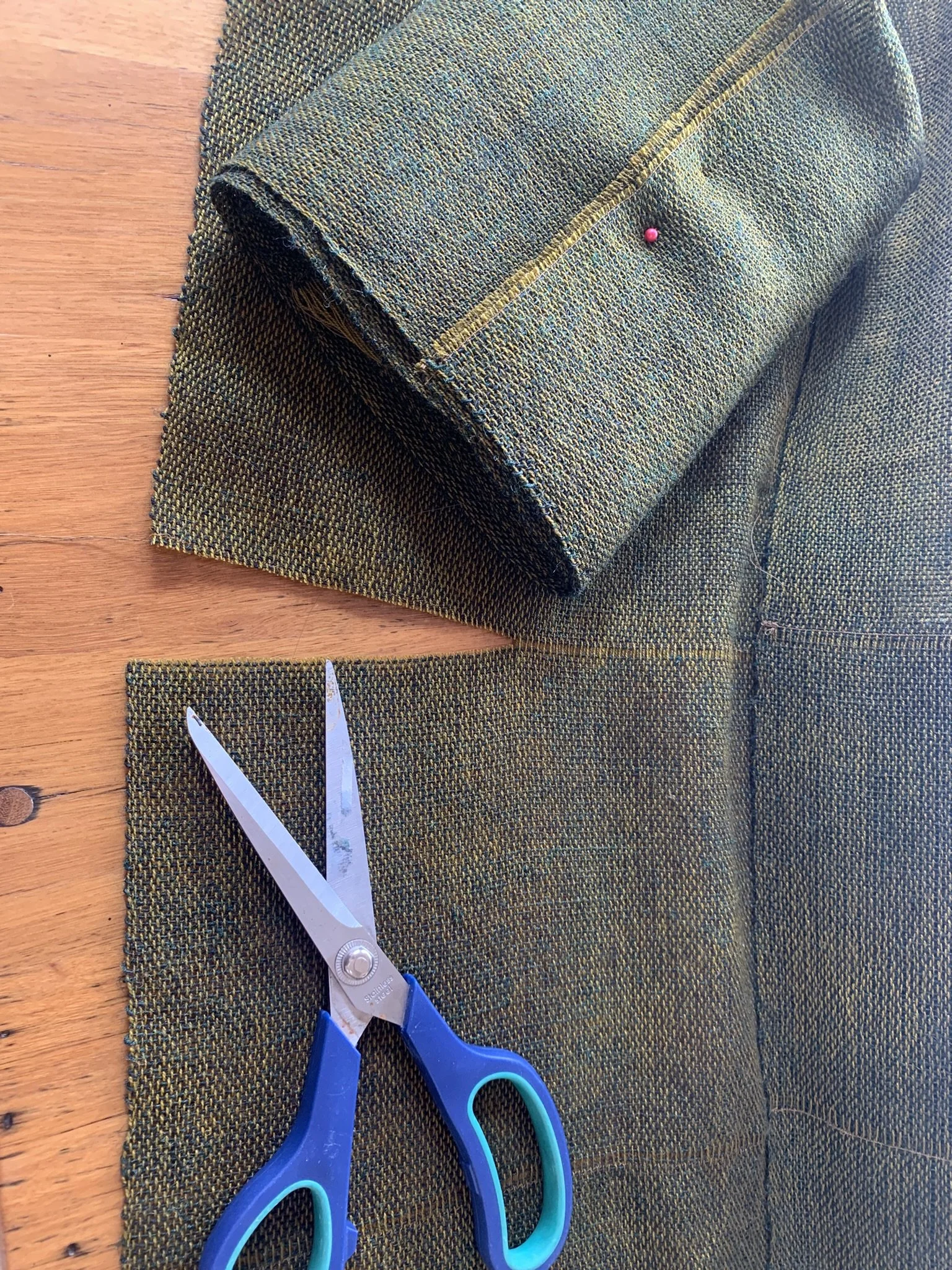
15. The cloth is then cut.
-
![]()
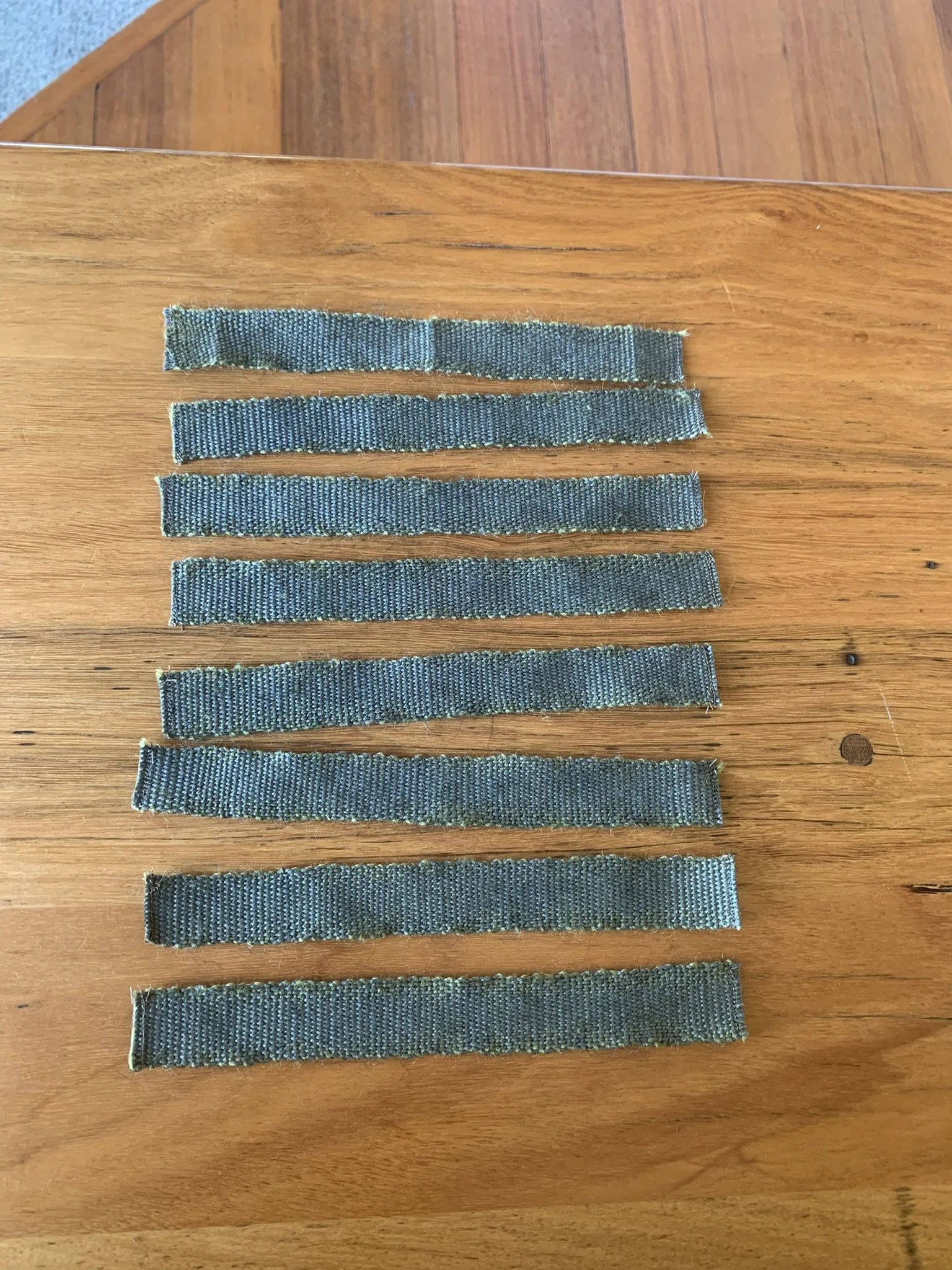
16. Meanwhile, I weave the hanging straps at an inkle loom.
-
![]()
These are also chopped up.
-
![]()
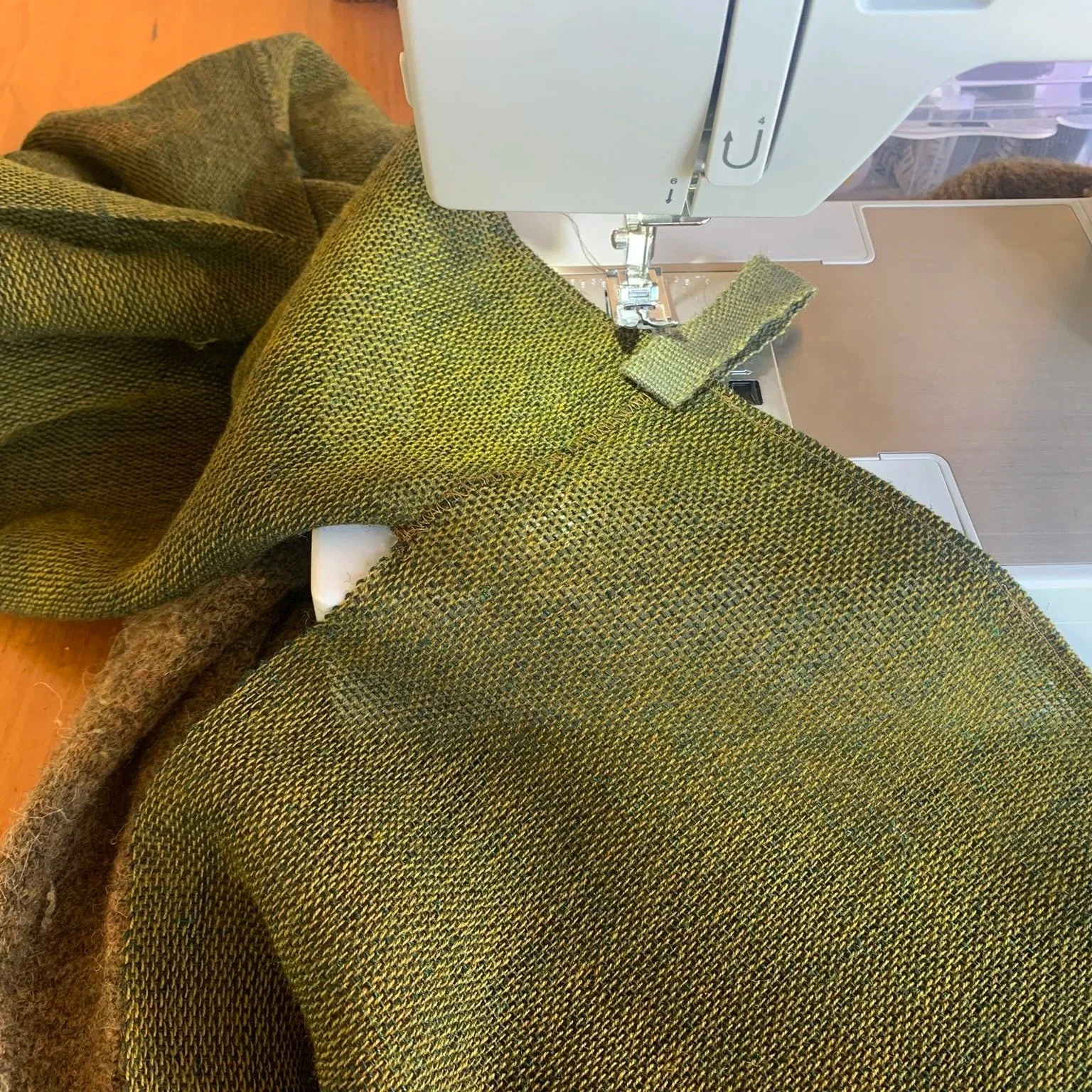
17. Finally they are pieced together.
-
![]()
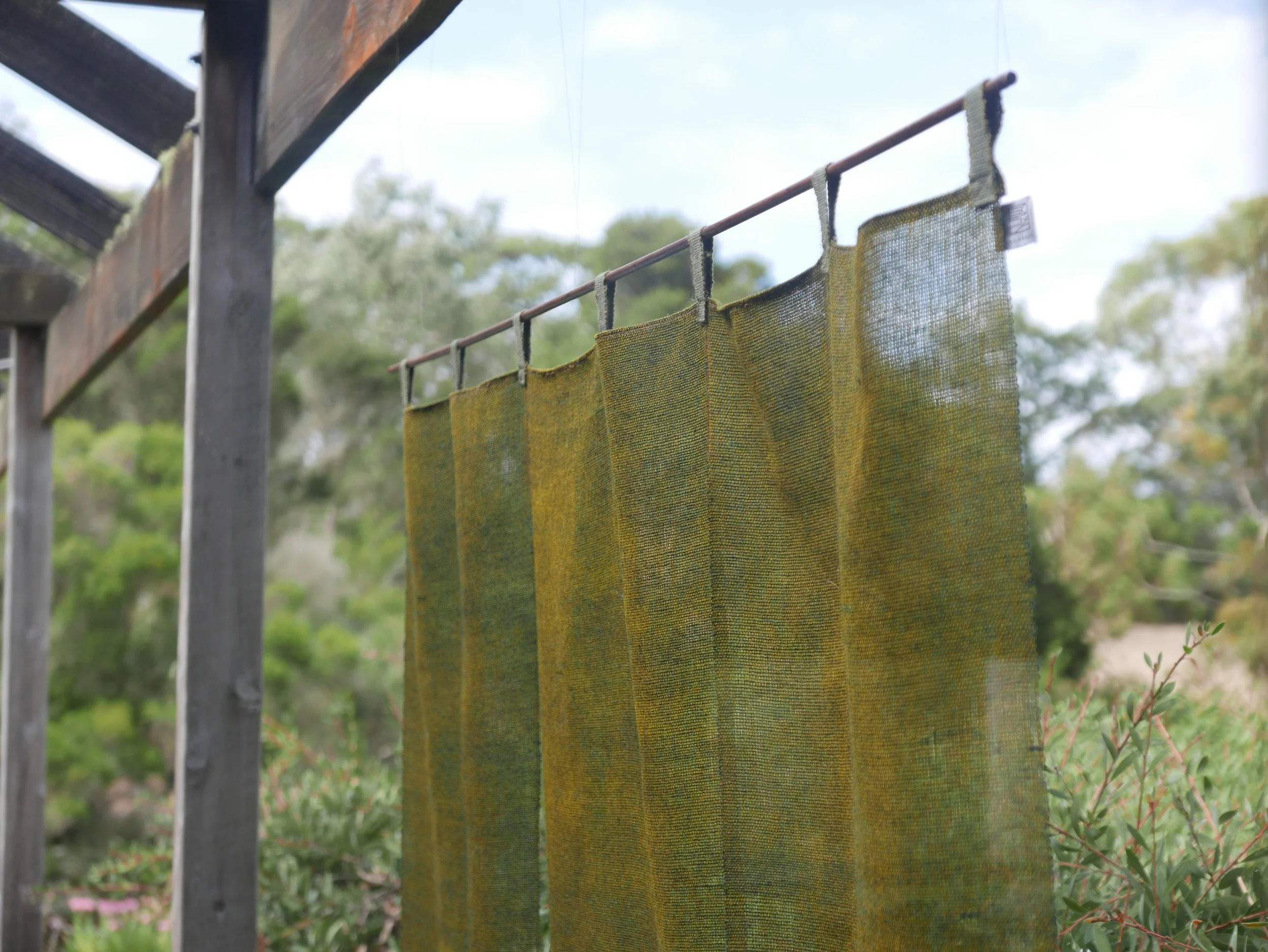
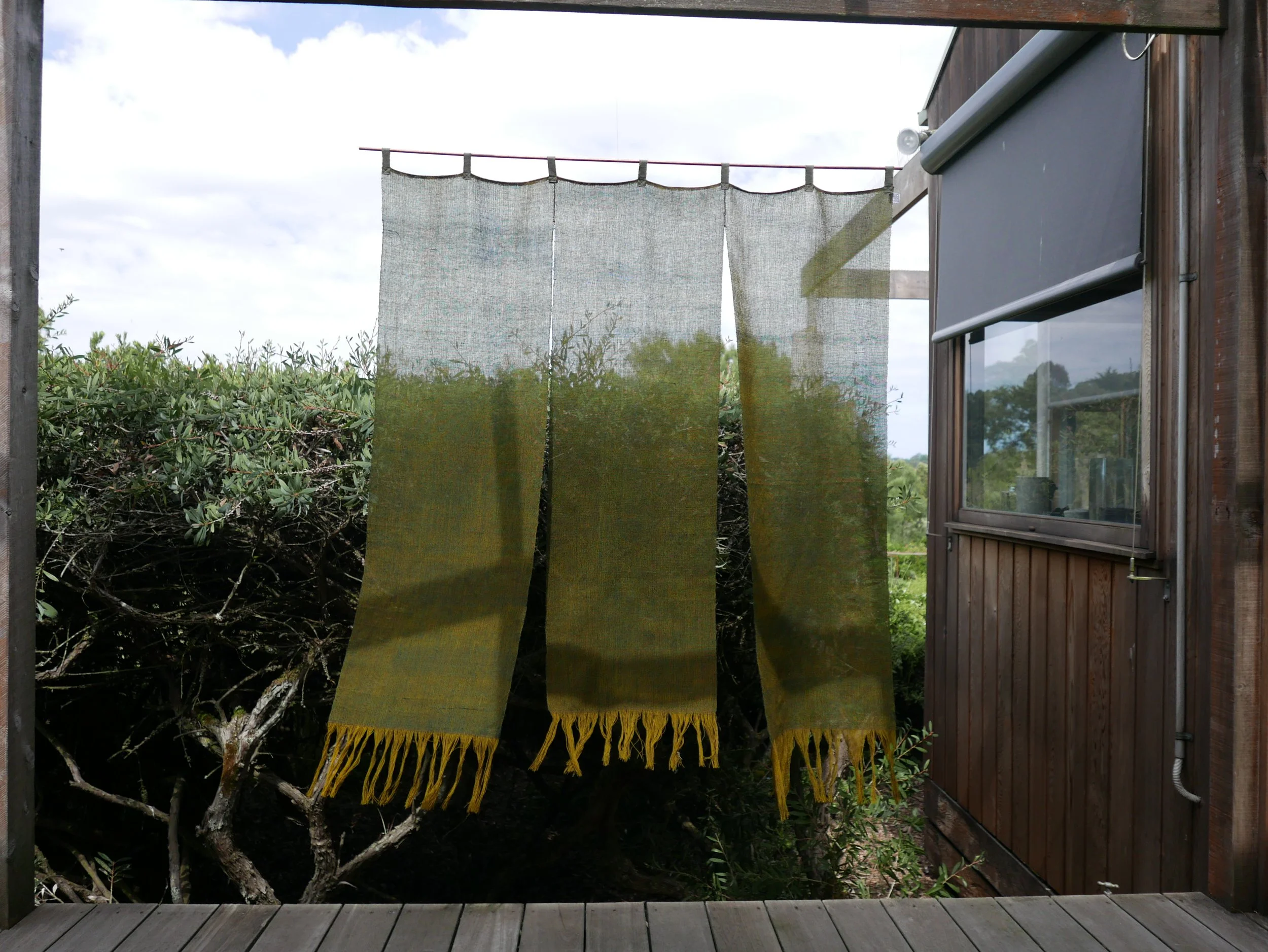
17. The finished piece can now be hung.
-
![]()